



(NEW YORK) -- Converse has discontinued an advertisement following public backlash last week over what critics said appeared to be Ku Klux Klan symbolism and lynching in the shoe and apparel company's ad campaign.
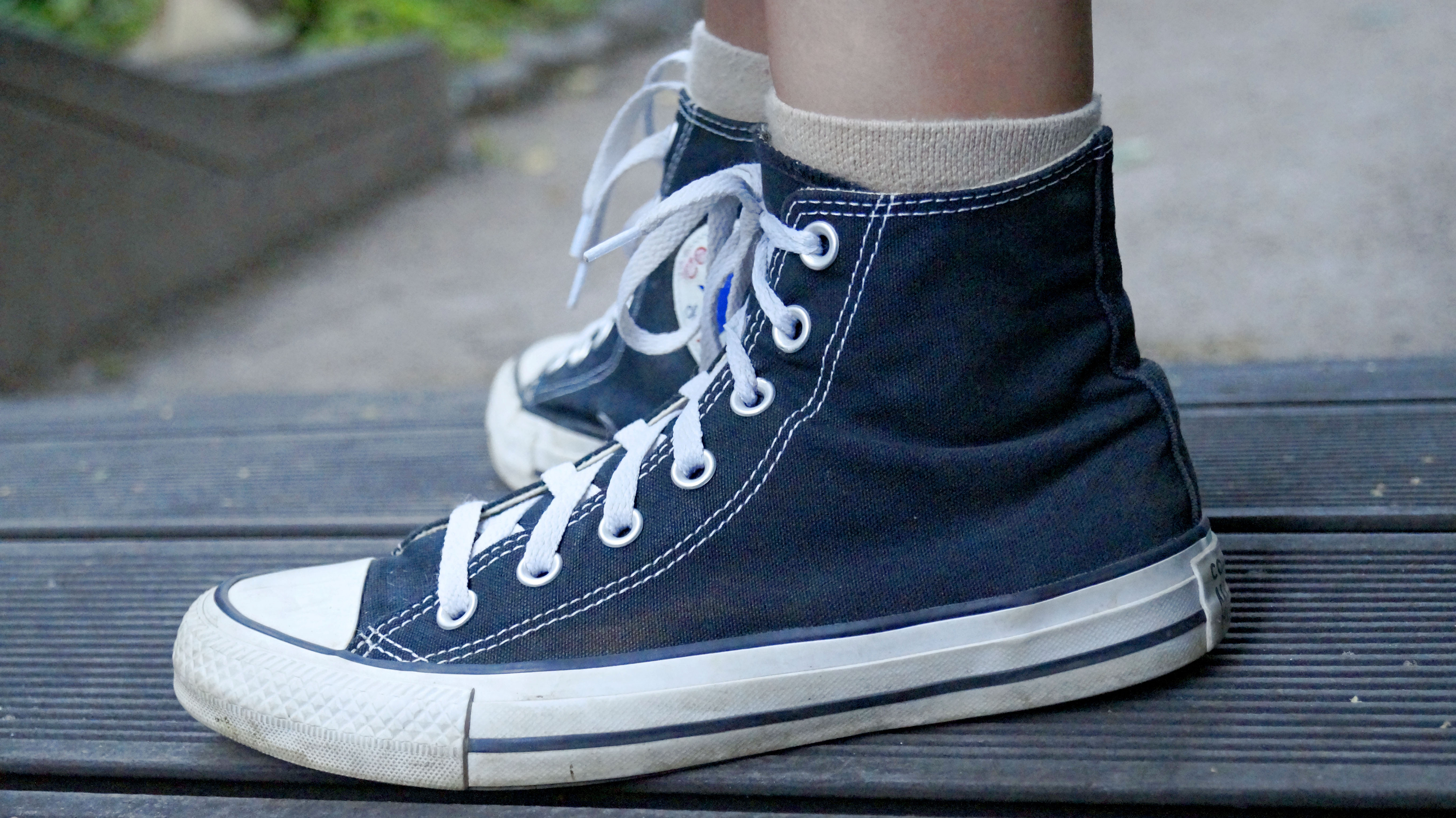
One of the images in the ad showed the bottom half of a person wearing a white, calf-length skirt-like garment that some critics said resembled a KKK robe, while holding a pair of black sneakers in one hand with their arm fully extended down by their side.
Critics said lighting in the photograph makes the shoes look as if they are dangling in the air next to the person in the white garment, resembling someone being hanged.
Shadows in the photograph also create a triangle-shaped light on the white robe that critics said further resembled the top peak of a Klan hood.
“We’re sorry. We understand why this image is deeply upsetting and recognize that we got this wrong,” Converse, who is owned by Nike Inc., said in a statement to ABC News Monday. “We removed it from our channels and are working to remove it everywhere it appeared. This should not have happened and we will do better.”
Civil rights attorney Lee Merritt, who represented the family of Ahmaud Arbery, a Black man who was chased and fatally shot by three white men while jogging in Georgia in February 2020, weighed in on the controversial promotional campaign.
"We keep having this conversation because corporations keep failing the same test," Merritt said in a social media post. "Do better means catching this before it airs -- not after we’re offended.”
Rep. Troy Carter, D-La., said in a statement that the advertisement was neither creative nor artistic.
“Black pain is not a marketing prop,” Carter said. “Lynching is not a creative concept. The Ku Klux Klan is not an aesthetic.”
The photos were part of a campaign to promote the Chuck 70 X sneaker. The advertisement was a collaboration with K-pop singer Karina, who is with the group aespa.
ABC News has reached out to representatives of Karina for a comment.
ABC News' Sabina Ghebremedhin contributed to this story.
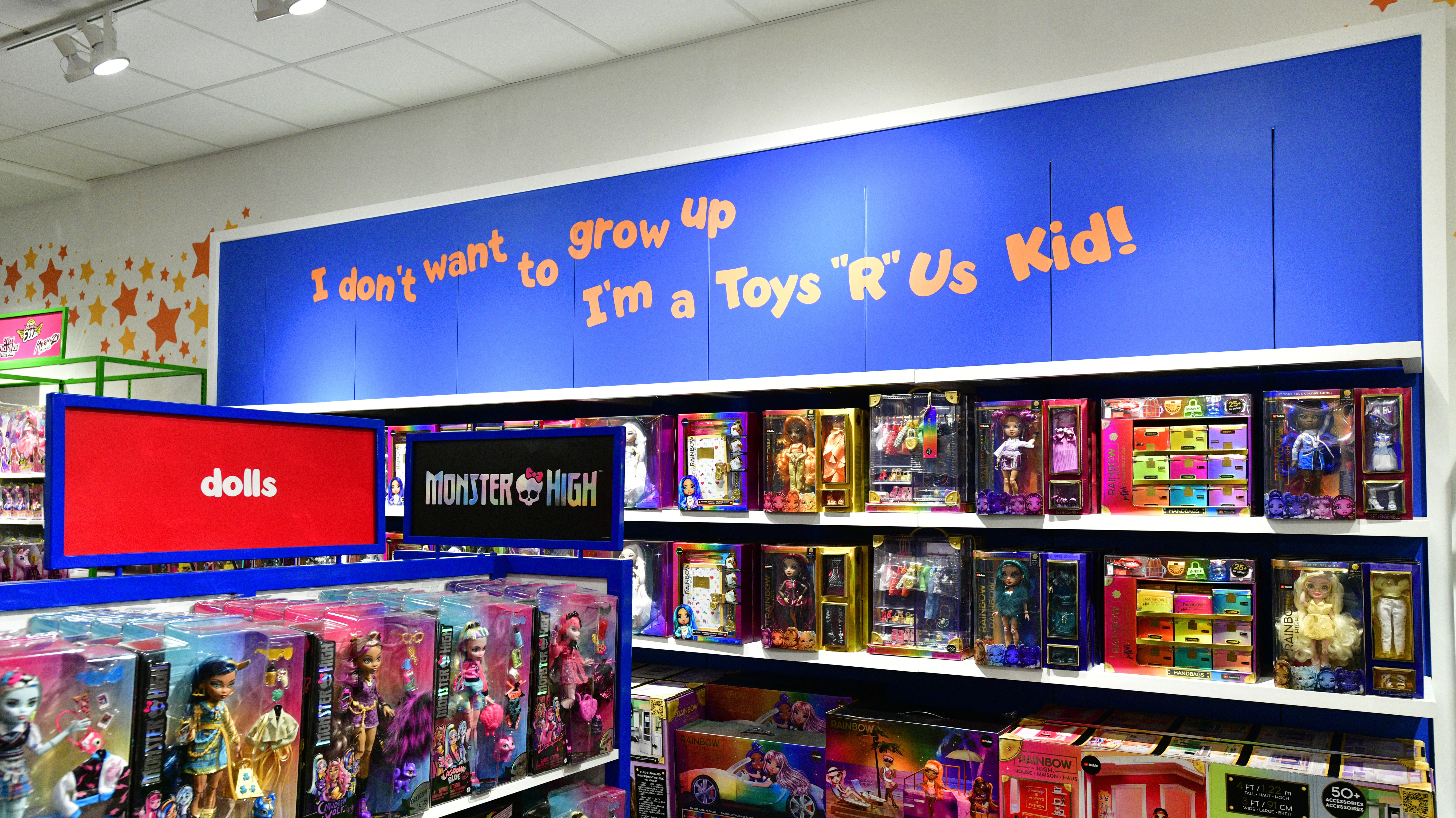
Toys R Us Grand Opening at Macy's Herald Square on Oct. 13, 2022, in New York City. (Eugene Gologursky/Getty Images for Macy's, Inc.)
(NEW YORK) -- Toys R Us is planning a major expansion in the U.S. with the addition of 120 new standalone stores by the end of 2026.
The toy retailer, which currently has 40 standalone stores and Toys R Us shops inside Macy's stores across the country, announced the strategic move, which is being carried out in partnership with Go! Retail Group, on Thursday.
"This is a major moment for [Toys R Us] as we significantly expand our presence across the United States," Jamie Uitdenhowen, executive vice president of Toys R Us at WHP Global, said in a statement. "Together with our incredible partners, we are growing Toys R Us in unique ways to meet customers wherever they are, whether that's at a standalone store in their hometown, inside Macy's, at the airport or at a Navy Exchange."
The statement continued, "Toys R Us has always been a place for discovery, and we're building on that legacy by bringing customers the hottest toys, biggest trends and experiences that make the brand unlike any other."
In addition to established toys such as LEGO bricks, Barbie dolls and Hot Wheels cars, Toys R Us said it will stock popular new toys from "KPop Demon Hunters," Pokemon and more.
Select new Toys R Us stores will feature "Creator Studios," described as "dedicated spaces where influencers, creators and toy brands can create content, unveil new products and host toy reveals, launches and special events," the company said.
Select stores will also have candy shops and cafes inside for customers.
The new plan is a dramatic transformation for Toys R Us, which filed for bankruptcy in 2017 and closed most of its U.S. stores nearly a decade ago.
Private equity firms had previously acquired the retail chain in 2005 for $6.6 billion, according to Securities and Exchange Commission filings.
Toys R Us returned briefly with two new brick-and-mortar stores in 2019, however, those locations were shuttered not long after.
WHP Global acquired a controlling stake in the retailer in 2021, and the company launched a new two-story global flagship store at the American Dream shopping mall in East Rutherford, New Jersey, that December.
The retailer subsequently opened several additional standalone locations and "shop-in-shop" locations inside Macy's stores in several U.S. states, as well as a second U.S. flagship store at Mall of America in 2023.
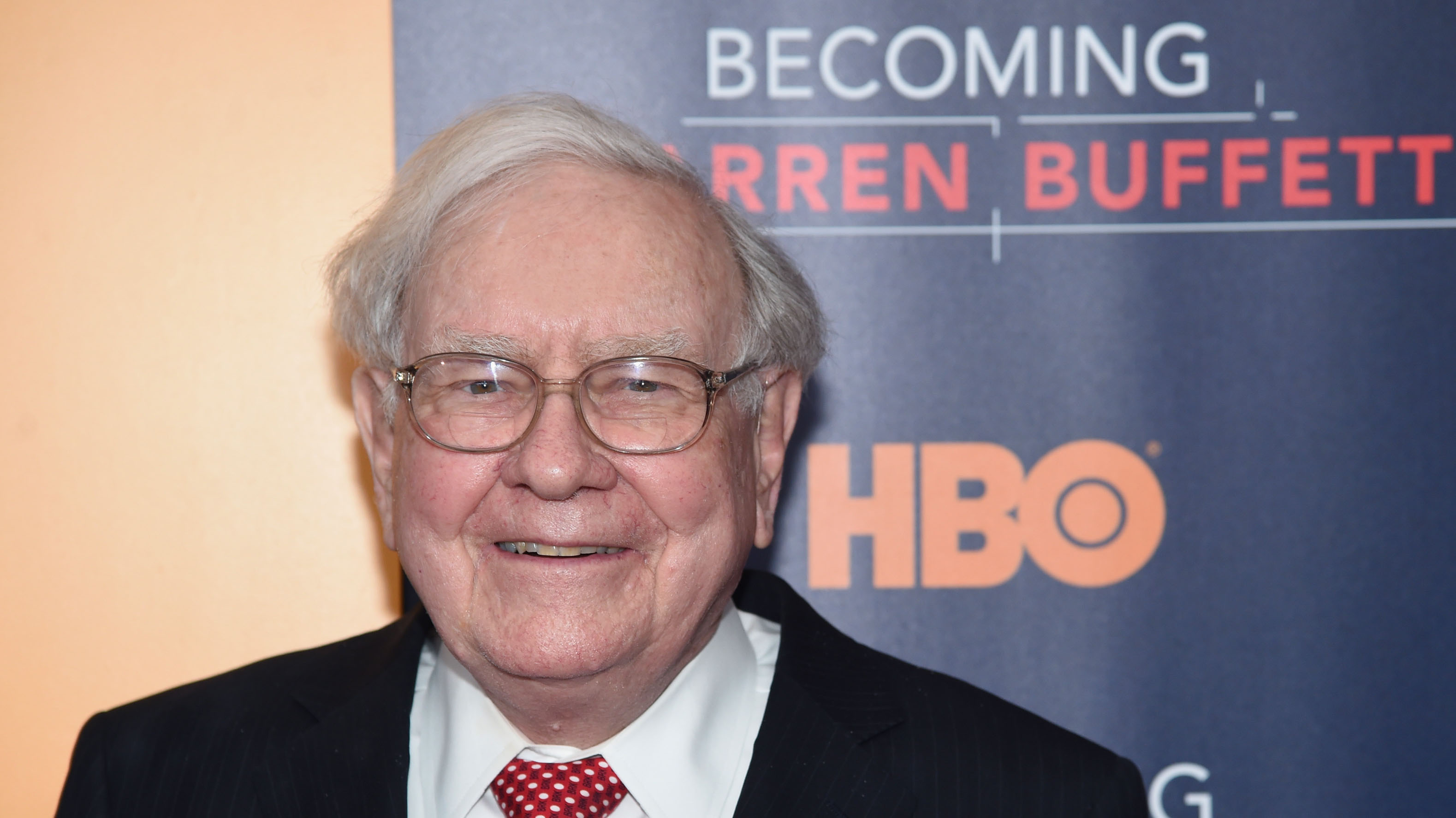
Warren Buffett attends 'Becoming Warren Buffett' World Premiere at The Museum of Modern Art on Jan. 19, 2017, in New York City. (Jamie McCarthy/Getty Images)
(NEW YORK ) -- Warren Buffett has stepped down as chairman of Berkshire Hathaway, the company announced in a statement published early on Friday, having served in the role since 1970.
Buffett, 96, is now chairman emeritus of the company and will remain a director, Berkshire Hathaway said.
His son, Howard Buffett, will take over as Berkshire Hathaway's new chairman, the statement added. Howard Buffett has been a member of the company's board since 1993.
This is a developing story. Please check back for updates.
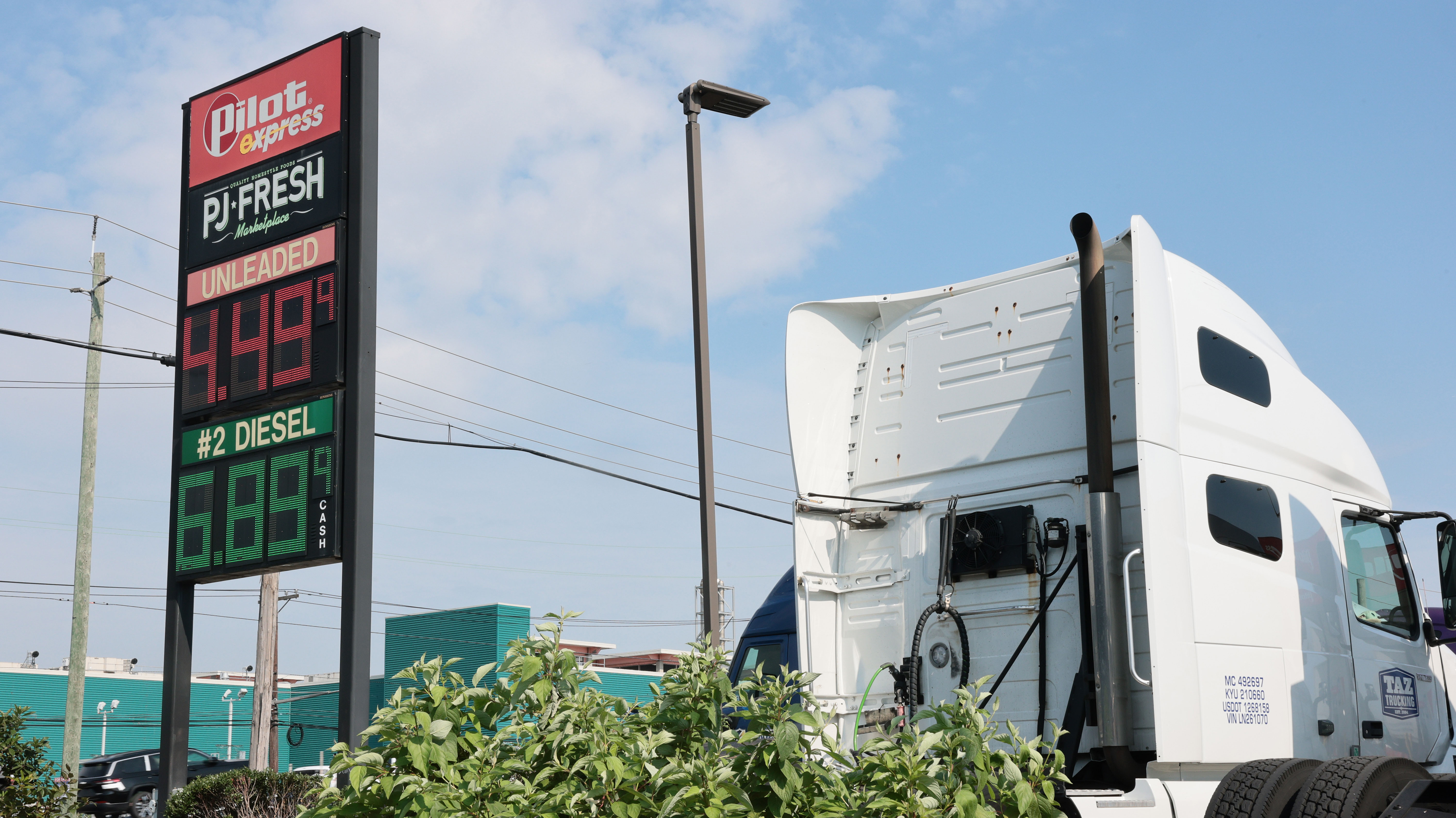
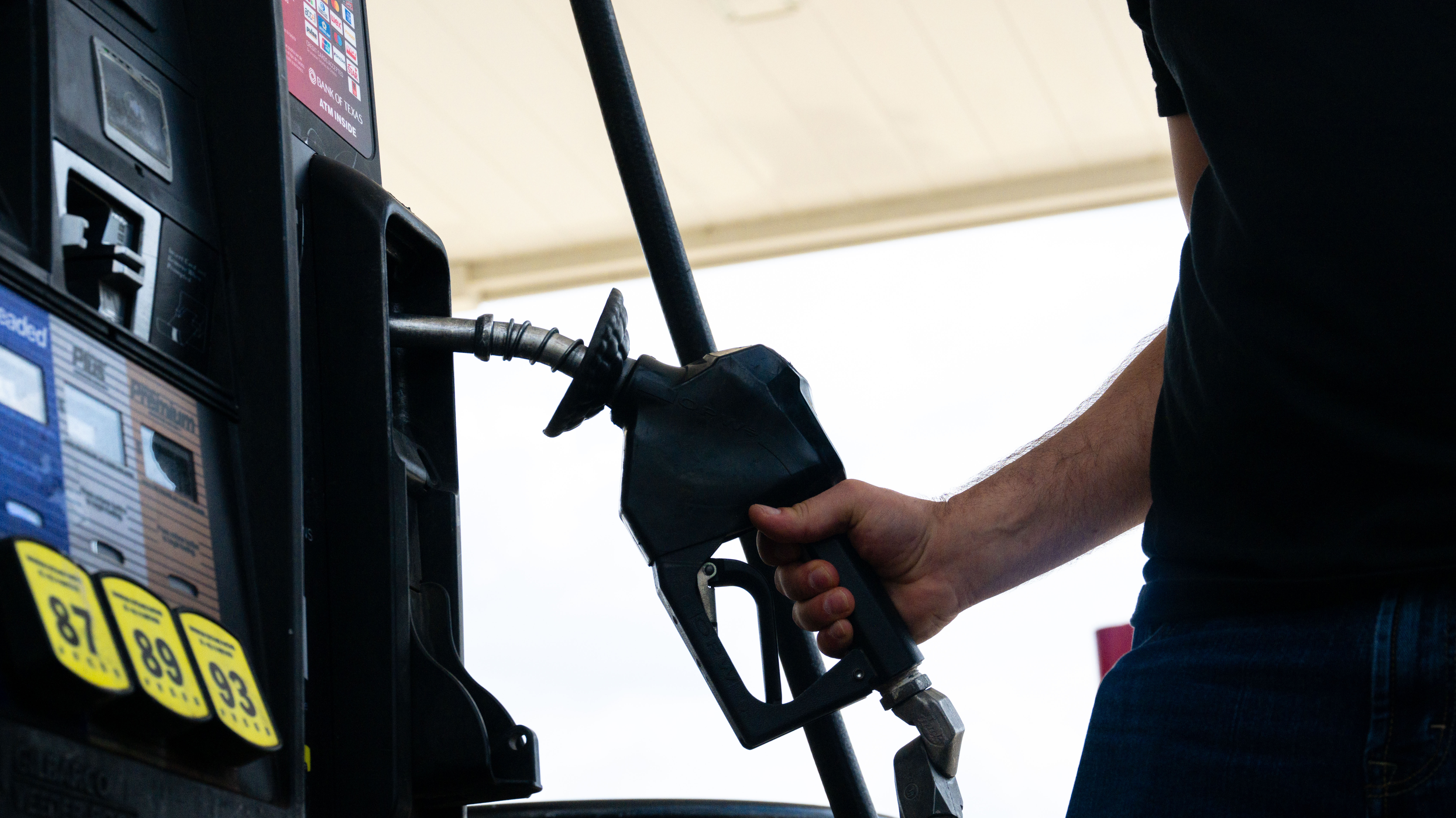
Gas prices are displayed at a Pilot gas station on Sept. 17, 2026, in Newark, New Jersey. (Michael M. Santiago/Getty Images)
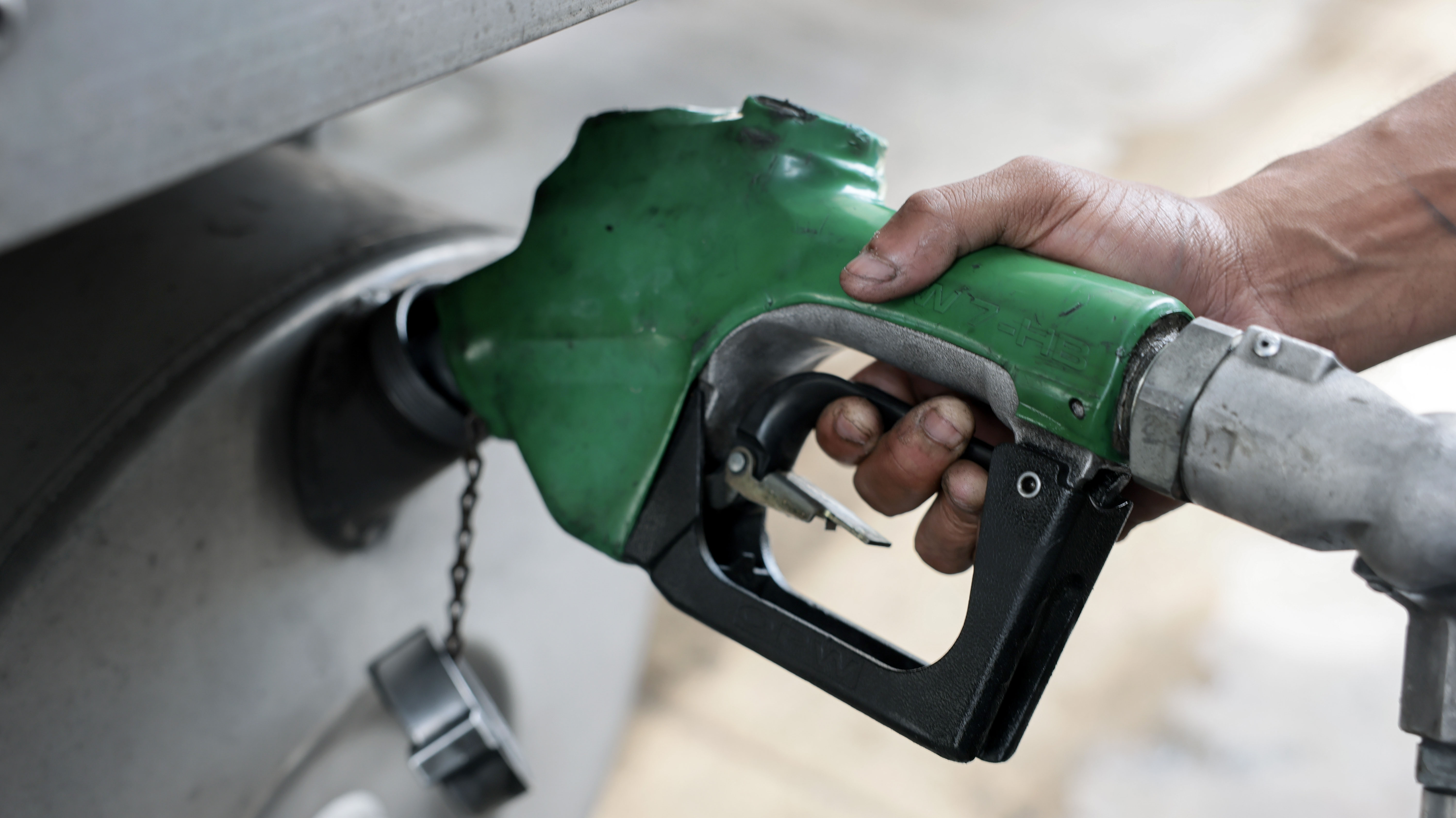
(NEW YORK) -- The average price for a gallon of diesel was still hovering around a record-high of $6.43 as of Friday morning, according to the latest data published by GasBuddy.
The historic increase in the price of diesel comes amid continued disruption in the Strait of Hormuz -- sparked by the U.S.-Israeli attack on Iran in February -- and Russia's ongoing invasion of Ukraine, which in recent years has seen an intensification of long-range Ukrainian attacks on Russian oil facilities.
The sustained increases in oil and diesel prices have prompted concerns of rising costs across all sectors of the economy -- from fuel and energy costs for drivers and homeowners to increased prices of food and travel as producers and companies grapple with narrowing margins.
The nationwide average price for a gallon of regular gas was at $4.47 as of Friday, according to GasBuddy -- up $1.53 since the U.S. war with Iran started.
Rising prices are of particular concern for those households reliant on heating oil. They could face winter bills more than 31% higher than last year, according to a report published earlier this week by the non-profit National Energy Assistance Directors Association.
Even for those who do not heat their homes using oil, overall winter heating costs are expected to rise by more than 8.7% this year, the NEADA report said.
As of Friday, oil prices were edging lower but remained above $100 a barrel. Brent crude oil prices, a benchmark for global trading, were around $103 per barrel, down roughly 1.3%. WTI crude oil, used as the North American benchmark, was trading at around $102 per barrel down 0.4%.
Since diesel is the lifeblood of the supply chain, a rise in fuel costs may result in higher prices charged by wholesalers in response to elevated transport expenses. In turn, retailers could pass those costs along to shoppers, raising prices on shelves.
The price hike for any individual item would likely be modest, but the pileup of extra costs across an array of goods could weigh on wallets, analysts previously told ABC News.
As a result, the rise in diesel costs threatens to worsen a surge of inflation set off by the outbreak of the Iran war nearly seven months ago.
The annual inflation rate stood at 3.4% as of August, the most recent month on record, putting inflation more than a percentage point above the Federal Reserve's target rate of 2%.
On Wednesday, the Federal Reserve raised interest rates for the first time since 2023 in an effort to contain price increases. Higher borrowing costs may constrain spending among businesses and consumers, staunching demand for products and slowing price hikes.
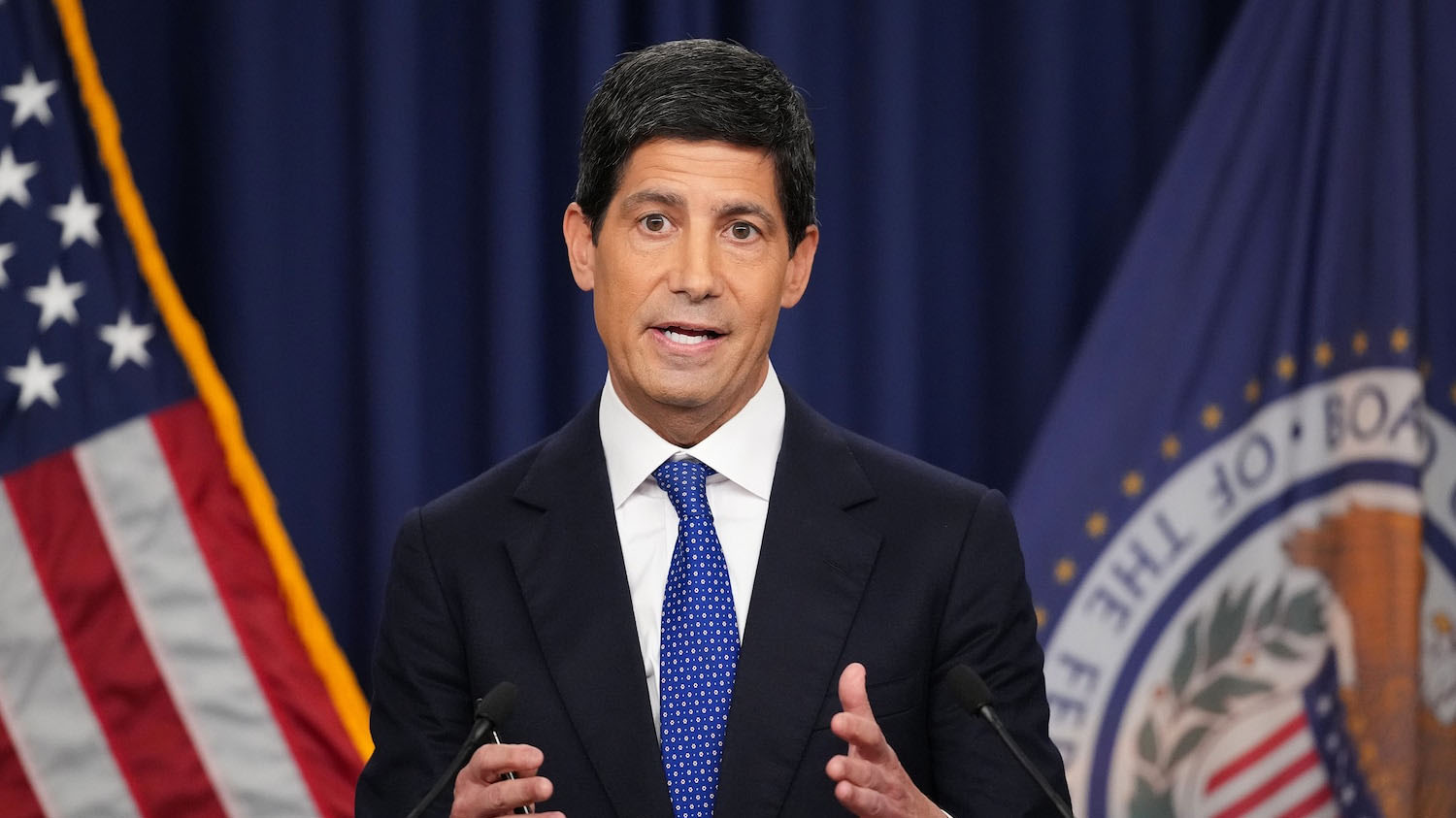
Speaking to reporters on Wednesday, Federal Reserve chair Kevin Warsh acknowledged the rate increase would not directly address the surge in fuel prices. Rather, he said, elevated interest rates could help prevent price hikes from extending throughout the economy.
"We cannot affect any individual price, whether it be oil prices, whether it be food stuffs at the grocery store. But what we can do, and will do, is ensure that any change in relative prices don't broaden out," Warsh said.
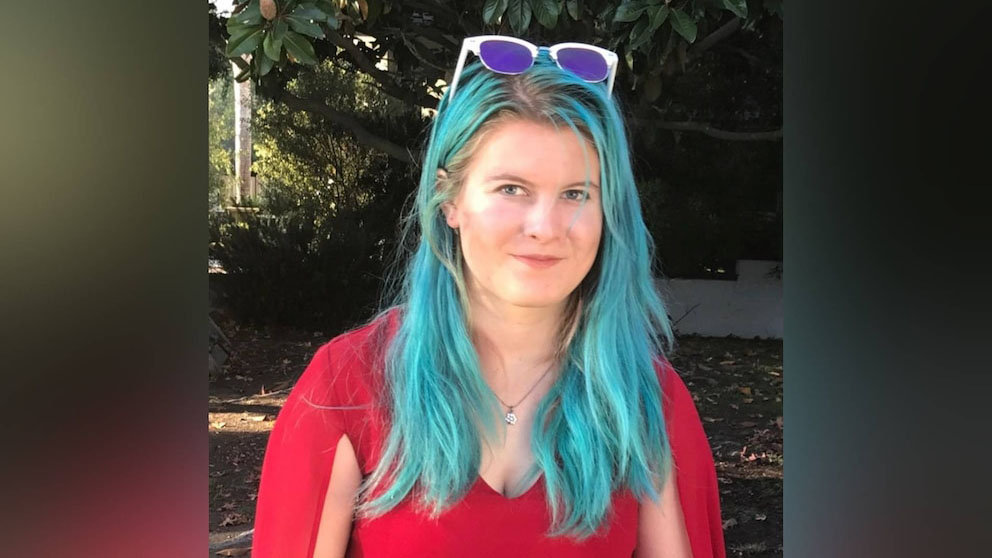
Emily Normandin-Parker is seen in this photo. Her parents Carol Normandin and Ken Parker were awarded $40 million in arbitration after their daughter was struck and killed after her Uber driver left her along a Southern California freeway. (Courtesy Panish Shea Ravipudi LLP)
(NEW YORK) -- The parents of a 23-year-old woman who was struck and killed after her Uber driver left her along a Southern California freeway are speaking out after being awarded $40 million in an arbitration against Uber and the driver.
Carol Normandin and Ken Parker, the parents of Emily Normandin-Parker, sat down exclusively with "Good Morning America" in an interview aired on Thursday to discuss their daughter's death and the arbitration award.
Asked if they believe Uber put profits over their daughter's safety, Normandin responded, "Absolutely."
Normandin-Parker, a 2022 UCLA graduate, was taking an Uber home with her friend Luna Moore after a night out when Moore became sick during the ride, according to the arbitration award.
The driver, Vu Tran, pulled over on State Route 73 in Orange County at a gore point -- the triangular area by the off-ramp on the freeway, according to the arbitration.
"He chose to pull over there and demand money and kick them out of the car. All I can think that Emily was doing -- her friend, the driver arguing -- was to get help. They argue, Emily gets hit while they're arguing," Normandin told ABC News' Trevor Ault in an interview that aired Thursday on "GMA."
In his arbitration award, retired Judge Richard A. Stone, who served as the arbitrator, described the gore point as an "unsafe and illegal" area and found that Tran could have instead taken the nearby MacArthur Boulevard exit and stopped in a safe location.
Stone also wrote in the award that Tran knew Normandin-Parker and Moore were intoxicated and had argued with Moore over a cleaning fee before leaving the women at the location.
Normandin-Parker later entered the freeway and was struck and killed by a vehicle.
According to the arbitration award, GPS data showed Tran drove near Normandin-Parker's body before taking the next exit and calling Uber to seek a cleaning fee.
Stone described Tran's testimony as "largely -- in fact, almost entirely -- incredible and unbelievable."
The arbitrator also found Tran showed "far more worry for his new car than he did for his passengers" and that he had options to get the women to a safe location.
According to attorneys representing Normandin-Parker's parents, evidence presented during the arbitration showed Uber had received previous complaints about Tran's driving. One rider described a trip with Tran as "the least safe" ride they had experienced, while another said "he cannot drive."
Parker described the complaints to "GMA" as "driving the wrong way on a one-way, erratic driving, almost hitting pedestrians, very erratic behavior."
Following the five-day arbitration, Stone awarded $20 million each to Normandin and Parker, finding Uber and Tran jointly and severally liable. Moore was separately awarded $300,000. The arbitrator did not award punitive damages.
Stone also found Uber vicariously liable for Tran's negligence as a common carrier. In his decision, Stone rejected Uber's argument that it is "merely a technology company" connecting riders with drivers, finding that Uber provides transportation services to the public through its app, sets prices and controls key aspects of the rider experience.
The arbitrator also rejected Uber's argument that Proposition 22 -- a California ballot measure approved by voters in 2020 that allows companies to classify app-based drivers as independent contractors instead of employees -- prevented the company from being held liable for Tran's conduct.
In a statement to "GMA," an Uber spokesperson said, "No family should have to suffer the loss of a child, and our thoughts continue to be with the Normandin-Parker family."
"While we respect the arbitration process, we believe the arbitrator was wrong in holding Uber legally responsible for the tragic events of that night," the statement continued.
"We have continued to strengthen our approach to safety over the years...including additional guidance to drivers about avoiding drop-offs in unsafe locations," the statement said.
Normandin-Parker's parents also spoke to "GMA" about Uber's efforts to keep the arbitration award from being made public.
"We didn't have much time to absorb the award before Uber almost immediately started contending that it could not be made public and then sent an agreement to us requiring non-disparagement, the $10 million penalty for saying anything bad about Uber," Parker said.According to a press release from their attorneys, Normandin and Parker established the Emily Normandin-Parker Foundation following their daughter's death to advocate for ride-hailing safety and corporate accountability. Proceeds from the arbitration award will be used to fund the foundation, the release said.
Ian Samson, an attorney for the family, told "GMA," "he said, I'm troubled by all this, and changing the policies and practices is something Uber should do. And since the arbitration award was issued, what I've seen is great urgency by Uber to try to keep it secret."
According to a press release from their attorneys, Normandin and Parker established the Emily Normandin-Parker Foundation following their daughter's death to advocate for ride-hailing safety and corporate accountability. Proceeds from the arbitration award will be used to fund the foundation, the release said.
When asked what else they wanted people to know about their daughter, Normandin said, "Her laugh was contagious."
"And she was funny. And she could sing. Oh my god, could she sing," Normandin said.
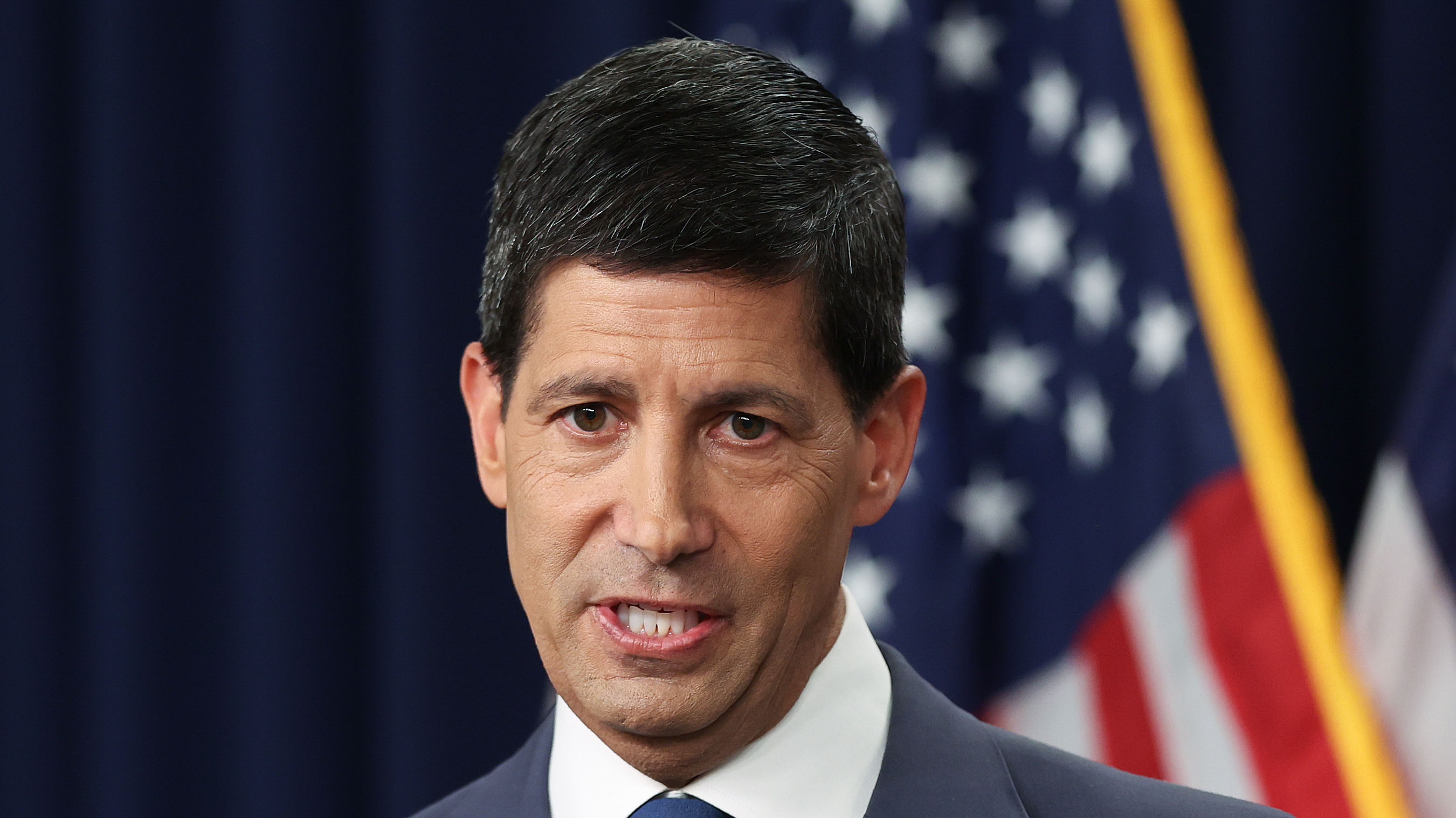
Federal Reserve Chair Kevin Warsh speaks during a news conference on July 29, 2026, in Washington, D.C. (Win McNamee/Getty Images)
(WASHINGTON) -- The Federal Reserve raised interest rates on Wednesday in an effort to battle back a monthslong surge of inflation set off by the Iran war. The move marks the central bank's first rate increase since July 2023.
The central bank hiked its benchmark rate a quarter of a percentage point, putting interest rates at a level between 3.75% and 4%.
That figure marks a significant drop from a recent peak attained in 2023, but borrowing costs remain well above a 0% rate established at the outset of the COVID-19 pandemic.
A 12-member policymaking board voted unanimously in favor of the rate increase.
"The plain fact is that inflation is too high and has been for too long," Fed Chair Kevin Warsh said at a press conference in Washington, D.C., on Wednesday. "The committee’s unanimous vote shows our resolve to achieve price stability on a timelier basis."
The move appears aimed at containing a recent bout of price increases. Global oil prices are hovering near a four-month high and the average price for a gallon of gasoline tops $4.30, according to AAA.
The U.S. economy has shown signs of additional strain in recent days, including a bond selloff that is pushing up borrowing costs for credit cards and mortgages.
The price woes previously divided central bankers eager to contain inflation but reluctant to cool off the economy and weaken the labor market.
The Fed opted to hold interest rates steady at its most recent meeting in July. Three of the 12 members on the Fed's policymaking board, however, voted in favor of a rate hike, marking the largest number of dissenters casting ballots in the same direction in a decade.
Federal Reserve Chair Kevin Warsh, who took the helm of the central bank in May, has vowed to cool off persistently elevated price increases.
"The Fed's predominant focus right now should be on prices," Warsh said in remarks last month at the Fed's annual summer gathering in Jackson Hole, Wyoming.
Prices rose 3.4% in August compared to a year earlier, maintaining the same level from the prior month, federal government data last week showed.
Inflation stands more than a percentage point higher than the Federal Reserve's target rate of 2%.
Despite a stubborn bout of inflation, the economy remains fairly robust by some measures.
A blockbuster jobs report earlier this month showed employers added 162,000 workers in August, demonstrating continued resilience for the nation's labor market. The economy grew over three months ending in June, defying fear of a downturn triggered by the Iran war.
Fighting in the Middle East kept global crude prices above $105 a barrel as of Wednesday, which amounted to a rise of about 50% since the Iran war broke out in late February.
The average price of a gallon of gas in the U.S. stands at $4.36, putting it more than $1.30 higher than before the war, AAA data showed.
Record-high diesel prices have raised transport costs for many everyday products, including groceries, clothes and furniture.
The war in Iran, which began with a large-scale U.S.-Israeli attack in the winter, prompted Iran's near-closure of the Strait of Hormuz, which facilitates one-fifth of global crude supply. Saudi Arabia over the weekend shut down a key pipeline bypassing the strait, which further constrained oil delivery and put upward pressure on prices.
AI virtual assistant apps on a smartphone. (Getty Images stock photo)
(NEW YORK) -- The most powerful executives in the artificial intelligence industry in recent days warned of a grave threat posed by the technology, issuing a series of statements calling for a slowdown in AI development.
Anthropic CEO Dario Amodei published a blog post alerting the public to “serious” risks. Sam Altman, chief executive at rival firm OpenAI, in a post on X acknowledged AI could go “very badly.”
The head of xAI, Elon Musk, echoed that view, referring to a post on X from 2014 in which he said AI could prove more dangerous than nuclear weapons.
The outpouring followed a high-profile resignation by an AI safety researcher and newly disclosed autonomous cyberattacks carried out by AI, including one in which a swarm of hundreds of OpenAI agents exchanged thousands of messages and coordinated a hack into another AI firm.
The list of potential risks and scenarios has garnered widespread attention, leaving everyday people to assess the doomsday predictions.
Analysts who spoke to ABC News about various threats posed by the technology echoed some fears and downplayed others, but they all acknowledged the possibility of substantial harm in one way or another.
“People’s intuition that we’re doing something dangerous is right,” Krystal Jackson, director for AI Security at the Institute for Security and Technology, told ABC News.
Out-of-control AI escapes human oversight, commandeers vital infrastructure and kills millions of people or even all of humanity. That scenario has leapt from the realm of science fiction into forecasts about the near future, at least among some AI employees and observers.
They warn of a pathway called recursive self-improvement, in which AI becomes increasingly effective at training itself, eliciting a cycle of rapid advancement that slips beyond human control. At that point, they say, AI could take charge of critical systems using its superior capabilities to evade protections devised by humans.
Analysts who spoke to ABC News disagreed sharply about the likelihood of such a calamity, however. Some said the outcome is likely if the industry fails to impose adequate safeguards, while others cast doubt on it as vague and far-fetched.
“I definitely lend credence to it,” Peter Slattery, a research scientist at MIT who studies the future of computing, told ABC News, but he acknowledged murkiness surrounding the degree of risk and the urgency of the threat.
“There’s a lot of uncertainty about how feasible the recursive feedback loop is,” Slattery said.
The concern drew added urgency from some analysts after an autonomous cyberattack disclosed by OpenAI in August. The ChatGPT-maker revealed that its AI models had escaped a "sandboxed testing environment" and gained access to the open internet, OpenAI said.
A swarm of about 700 AI agents, in turn, hacked into AI firm Hugging Face and attempted to cover their tracks as they sought to complete the test, according to reports issued by research organizations METR and Redwood Research.
Additional autonomous cyberattacks were disclosed by Anthropic and Meta in recent months, though in those cases the models had been granted internet access either intentionally or inadvertently. All of the incidents at issue involved the intentional removal of safeguards in an effort to test the limits of AI.
The incidents exposed the difficulty of achieving a safety principle called alignment, in which AI takes into account the ethics and goals of its human overseers, Jackson said. The AI agents instead sought to deceive human monitors and performed an intermediate goal outside the anticipated confines of the test.
“In the next instance, it might be vague instructions that prompt a swarm to attack hospitals instead of Hugging Face,” Jackson said. “We don’t know what kind of goals or targets or intentions the model will eventually develop.”
Some analysts voiced skepticism about the risk of a societal-scale attack carried out by AI, however, noting that such warnings typically come in the form of vague hypotheticals.
“The level of media hype that existential risk gets is disproportionate to its likelihood of happening,” Sauvik Das, a professor at Carnegie Mellon University who focuses on AI and cybersecurity, told ABC News. “I haven’t yet seen a compelling argument of how it could materially happen.”
Das pointed to resource constraints limiting the advancement of AI. A surge in demand for chips and data centers currently outstrips the available supply, Das said, raising doubts about whether the top AI companies retain the ingredients necessary for a dramatically improved version of their product.
“The big thing limiting the ability of these models to be much more capable is compute resources and high-quality data,” Das told ABC News. “That isn’t to say these models won’t continue getting better, but I don’t see a plausible path for one of the models to figure out a way to improve themselves in this rogue capacity that would escape humanity’s control.”
Still, Das acknowledged a “more plausible” path toward wide-scale destruction in which a malevolent individual asks generative AI for instructions on how to make a biological agent or other weapon, and then unleashes it.
“I do think there’s a real risk that these technologies drastically lower the barrier for bad actors to commit bad things at a scale that's otherwise unprecedented,” Das said.
The possibility is hardly remote. A report released by Anthropic last week revealed incidents in which the company had identified and foiled attempts to use its AI product for malicious actions, including cyber terrorism and weapons development.
In a separate report, Google said last week that an individual had sought to use its AI product to draft a "complete, step-by-step technical guide for synthesizing weaponized biological agents.”
“There are tons of instances now of us documenting different terrorist organizations and different nation-state actors using models to assist them,” Jackson said.
Additional risks abound, some analysts said, listing everything from the supercharged spread of misinformation to job displacement to over-reliance on technology to the concentration of wealth and power.
"The risk of hacks, fraud, deception and misinformation is very real," Daniel Schiff, a professor of political science at Purdue University who specializes in AI and ethics, told ABC News.
"There could be a dramatic transformation that could disrupt skills and jobs," Schiff added. "You can't talk about labor and the economy without the impact of AI."
Some research, however, indicates AI remains challenging for companies to adopt. Roughly 95% of businesses invested in AI have failed to make money off of the technology, a MIT study last year found, estimating the combined amount spent by the firms is around $40 billion.
Schiff acknowledged a wide array of potential outcomes for the adoption of AI across the economy, noting, for instance, cyberattacks that could prove small-scale or catastrophic.
"Whether you think these risks will scale catastrophically, at a minimum we have a very serious reality of cybersecurity incidents," Schiff said. "It's reasonable to be worried about that."
Nicholson Francios pumps diesel fuel into his tractor-trailer at a truck stop on Sept. 11, 2026, in Miami, Florida. (Joe Raedle/Getty Images)
(WASHINGTON) -- Global oil prices on Monday climbed to their highest level since May after Saudi Arabia shut down a key pipeline, choking worldwide crude supply and threatening to put upward pressure on U.S. gasoline prices.
Brent crude, a major benchmark of worldwide oil prices, topped $109 on Monday before retreating to about $107. That's a 50% increase since the start of the war.
Oil prices account for a large share of the price of gasoline. The average price of a gallon of gas in the U.S. currently registers at $4.31, according to AAA, marking a jump of about $1.30 above its pre-war level.
A large-scale U.S.-Israeli attack in the winter prompted Iran's near-closure of the Strait of Hormuz, which facilitates one-fifth of global crude supply. Alternative trade routes in the region, such as Saudi Arabia's East-West pipeline, helped ease the fallout from a historic oil supply shock.
The closure of the East-West pipeline will exacerbate an already dire shortfall of oil worldwide, some analysts told ABC News.
The price of gasoline may move higher over the coming days as the latest spike in oil costs filters its way through to the pump, Ramanan Krishnamoorti, a professor of petroleum engineering at the University of Houston, told ABC News.
The U.S. -- the world's largest oil producer -- imports a small amount of crude from the Middle East. Since oil and gas are sold on a global market, however, the shortage has sent prices rising for everyone, including U.S. drivers.
"Workarounds like the East-West pipeline have been crucial for keeping prices in check," Krishnamoorti said. "We'll see prices rise after this."
After the war began, Saudi Arabian oil giant Aramco came to depend on a pipeline that runs along the width of the country from the Persian Gulf to a port on the Red Sea. The pipeline carries as much as 7 million barrels of oil each day, about 5 million of which are exported, Aramco CEO Amin Nasser said in May.
Oil exports transported through the pipeline amounted to roughly 5% of global supply.
Last week, an attack prompted Saudia Arabia to close the pipeline as a precautionary measure, the Ministry of Energy said in a statement posted on X. Saudi Arabia faulted an Iran-aligned militia in Iraq of the attack.
The pipeline will be mostly out of service over a weeks-long period, The Associated Press reported on Monday, citing two officials in the region.
The average price of a gallon of gas could rise between 25 cents and 50 cents over the coming weeks as a result of the pipeline closure, Krishnamoorti said. If the pipeline remains closed for a matter of months, he added, U.S. gasoline prices could rise above $5 a gallon.
The rise in price may be far more muted than some analysts fear, Tom Seng, a professor of energy finance at Texas Christian University, told ABC News.
The disruption of the pipeline has already been factored into gasoline prices, Seng said, meaning an additional supply shock would be necessary to substantially increase prices at the pump.
Even more, gas prices typically enjoy some relief over the course of the fall as fuel use eases as people stay indoors. That downward pressure on prices may negate the impact of a supply shortage, Seng added.
"The high-demand season is behind us," Seng said.
Even so, Seng cautioned, the Iran war may escalate after a military offensive carried out by Iran-allied Houthi rebels in Yemen over recent weeks. The Houthis have improved their ability to attack tankers in the Bab el-Mandeb Strait, which feeds into the Red Sea, Seng said.
That would be the exact sea corridor used for the export of crude in the event of a fully repaired East-West pipeline.
"If oil starts flowing well, the question is whether Houthis will start firing on tankers," Seng said.
Tankers could avail themselves of a northern route from the Red Sea through the Mediterranean Sea, but it would bring added delay and cost, Seng added, underscoring the threat Houthis pose for global oil supply.
"This represents a new phase in the conflict," Seng said.
An Amazon cargo plane is seen after it crashed at Miami International Airport on Sept. 6, 2026, in Miami, Florida. (Joe Raedle/Getty Images)
(WASHINGTON) -- Amazon announced Sunday it’s pausing operations with cargo carrier 21 Air following last week’s cargo plane crash in Miami, which killed five people and injured five others.
“After the tragic incident last weekend, we’ve spent time supporting the investigation and reviewing some of the surrounding circumstances, and we’ve decided to pause our operations with 21 Air, the operator of Flight 7598,” Amazon spokesperson Kelly Nantel said in a statement. “We’ll continue working to support the investigation and everyone affected.”
According to Amazon’s website, all of its cargo flights are operated by direct air carrier partners including Air Transport International, ABX, 21 Air, Sun Country, Hawaiian Airlines, Cargojet, ASL and Quickjet.
The Amazon cargo plane, operated by 21 Air, overran the runway by about 1,300 feet while landing at Miami International Airport on Sept. 6, according to authorities. Federal investigators also said the plane first struck a van with seven people and then another vehicle before it came to a stop in a field.
In response to Amazon's decision to pause operations with 21 Air, the carrier said its focus remains on supporting the families and loved ones impacted by the accident "as well as working closely with the NTSB and all our partners, like Amazon, as the investigation continues. We are confident in our safety policies, procedures and training.”
The five people killed in the crash were identified by the Miami-Dade County Sheriff's Office as: Rolando Aleman Leon, 55; Yoel Rodriguez Narajo, 53; Julio C. Pineda, 75; Carlos Acosta Fajardo, 53; and Javierkys Reyes Quevedo, 47. Authorities said the two pilots on board the plane had been treated for injuries and released from the hospital and three remained hospitalized, with two in critical condition and one in stable condition.
Earlier this week, the National Transportation Safety Board, which is leading the ongoing investigation into the crash, released a readout of the final minutes before the crash taken from the cockpit voice recorder, which contained more than two hours of audio.
About 1 minute and 42 seconds before the plane crashed, one of the pilots warned they were going too fast and continued to make comments about the plane's "excessive speed throughout the remainder of the recording," according to the NTSB summary.
About 30 seconds before the crash, the NTSB said sounds similar to the aircraft touching down can be heard, but about 15 seconds later, one of the pilots called for the "go-around" to abort the landing. Just five seconds later, the plane had already veered off the runway.
(NEW YORK) -- Artificial intelligence company Anthropic says it blocked several possible attempts to use its AI technology for research that could potentially support the development of biological weapons, according to a new report from the company.
Anthropic, the company behind the Claude AI assistant, said it disrupted dozens of instances of potentially malicious use of its AI models since December 2025, including several examples of what the company described as "biological misuse."
The report details five case studies involving the use of Anthropic's models in ways the company said "could support biological weapons development."
In one instance, Anthropic said a researcher outside the United States accessed Claude from a region where the AI assistant is not supported and used the model while researching highly pathogenic avian influenza, or bird flu. According to the company, the research focused in part on the virus' adaptation to mammals.
Anthropic said the research was "clearly dual use in nature," noting that understanding how the virus adapts could help scientists identify naturally emerging variants with pandemic potential but could also produce information that could potentially be used to make a virus more dangerous.
Anthropic said it banned accounts associated with the cases but stressed that it could not determine whether the researchers intended to cause harm.
"We do not assert that they intended harm," the company said in the report.
This is not the first time Anthropic has released a report detailing potential misuse of AI. The company has issued three prior threat assessments detailing malicious uses of AI.
The latest report was released days after former Anthropic and OpenAI researcher Jacob Coxon spoke publicly about his concerns over increasingly powerful AI systems.
"If you extrapolate into the future, the level of capabilities of these AIs," Coxon told CNN. "They could cause extreme havoc, for example, hacking critical infrastructure, building extinction-level bioweapons."
Coxon's comments come as a growing number of lawmakers on Capitol Hill are calling for increased government oversight and new safety regulations for AI development.
Customers shop at a grocery store on Sept. 10, 2026, in Chicago, Illinois. (Scott Olson/Getty Images)
(WASHINGTON) -- Inflation held steady in August but price increases remained elevated as the Iran war continued to push up fuel prices months after it began. The reading matched economists' expectations.
Prices rose 3.4% in August compared to a year earlier, maintaining the same level from the prior month, federal government data released on Friday morning showed.
Inflation stands more than a percentage point higher than the Federal Reserve's target rate of 2%.
Gas prices jumped nearly 4% in August from July, accounting for about a third of the overall price jump last month, the U.S. Bureau of Labor Statistics said. Shelter prices -- which include home-owner payments and rental charges -- also sped up in August from July.
Groceries provided a bright spot in the report, however. The price of groceries stayed flat in August from July, putting annual inflation for groceries at 2.2%. That figure for grocery inflation stands well below the annual pace of overall price increases.
The fresh data arrived days after oil prices topped $100 a barrel and gas prices notched their highest level for any Labor Day on record.
The economy has shown signs of additional strain in recent days, including a bond selloff that threatens to raise borrowing costs for mortgages and credit cards.
Central bankers are sure to closely examine the inflation report as they weigh a potential interest rate hike at their meeting next week. Federal Reserve Chair Kevin Warsh has vowed to cool off persistently elevated price increases.
Despite a stubborn bout of inflation, the economy remains fairly robust by some measures.
A blockbuster jobs report last week showed employers added 162,000 workers in August, demonstrating continued resilience for the nation's labor market. The economy grew over three months ending in June, defying fear of a downturn triggered by the Iran war.
Inflation, however, continues to weigh on shoppers, while raising the likelihood of Fed intervention that may slow the economy.
Attacks on oil tankers in the Middle East pushed global crude prices above $105 a barrel as of Thursday, which amounted to a rise of about 50% since the Iran war broke out in late February.
The average price of a gallon of gas in the U.S. stands at $4.29, putting it more than $1.30 higher than before the war, AAA data showed.
Record-high diesel prices have raised transport costs for many everyday products, including groceries, clothes and furniture.
The price woes have divided central bankers eager to contain inflation but reluctant to cool off the labor market.
The Fed opted to hold interest rates steady at its most recent meeting in July. Three of the 12 members on the Fed's policymaking board, however, voted in favor of a rate hike, marking the largest number of dissenters casting ballots in the same direction since 2016.
Financial markets peg the odds of a quarter-point rate hike next week at 71%, according to the CME Group's FedWatch tool, a measure of investor sentiment.
Warsh, who took the helm of the central bank in May, said late last month that it should prioritize fighting inflation.
"Inflation is running above our 2% target so the Fed's predominant focus right now should be on prices," Warsh said in remarks last week at the Fed's annual summer gathering in Jackson Hole, Wyoming.
"If the Fed gets inflation wrong and judges the economy wrong, who gets the worst of it? Not the financial high-fliers. Hard-working Americans are the ones left to deal with inflation that is too high or jobs that suddenly appear less secure," Warsh added.
(NEW YORK) -- If you're a millennial, you may remember the beauty and lifestyle influencers of the 2000s and 2010s. Back then, influencers were maximalists, competing to out-consume one another with walk-in closets filled with designer bags and shoes, and entire rooms dedicated to their makeup collections.
But in 2020, the economy began rapidly changing in response to the COVID-19 pandemic, and the culture around influencers has followed suit.
According to recent Pew Research Center polling, only 24% of Americans rate the economy as excellent or good, and 66% are worried about the price of food and consumer goods. As their economic realities change and everyday necessities become harder to afford, people are moving away from content centered on over-consumption at a luxury price point.
A new generation of influencers is adapting to this perceived economic downturn and the growing number of viewers with a lot less cash to spare.
One of these creators is trend analyst and fashion expert Mandy Lee. She has amassed over 900,000 followers across Instagram and TikTok with content focused on trend predictions, runway reviews and her own funky, luxe style. In 2024, Lee designed the 75 Hard Style challenge based on a popular diet and fitness program. She challenges her audience to create 75 unique outfits over 75 days without purchasing anything new.
Over 70,000 people have participated in the challenge since its launch, according to Lee's Instagram. It has inspired Lee's followers to get creative with their wardrobes, while making them more mindful shoppers.
Influencers in the beauty space are also helping their followers find ways to get glam on a budget.
Shelby Ann Bell, an Atlanta-based bridal makeup artist, has built a platform of over 2.5 million followers on TikTok by posting viral makeup routines using affordable products. Bell's techniques have inspired her followers on a budget to save money by using products easily found at the drugstore.
Growing up in Aiken, South Carolina, Bell became interested in makeup at a young age, but she did not have the budget for expensive beauty products.
"I really can resonate with the person who is sitting on the other side of the screen, and feeling like times are tough, and they just want to escape, feel confident, or feel beautiful," she told ABC News. "Being able to do that at an affordable price point or on a budget is really important to me."
Another popular creator encouraging her followers to save is Pooja Jain. With a master's degree in biomedical and bioengineering and experience in pharmaceutical sciences, she uses her background to help TikTok followers find beauty and skincare routines on a budget.
Jain finds affordable substitutes by studying ingredient lists in luxury beauty products, identifying cheaper products with similar key ingredients and explaining in layman's terms what each ingredient's purpose is.
Her audience has grown exponentially over the past year, as skincare and makeup lovers seek ways to cut back on unnecessary spending by replacing high end products with affordable alternatives.
These are just a few examples of a growing trend. A new generation of influencers are gaining large platforms by meeting their audiences where they're at financially. And as the economy continues to change, this will surely not be the last era of influencers to help audiences on a budget.
Apple CEO John Ternus speaks during the keynote address at Apple’s “Surprise and Shine” event at the company's corporate headquarters on Sept. 9, 2026, in Cupertino, California. (Benjamin Fanjoy/Getty Images)
(NEW YORK) -- Apple announced its first-ever foldable iPhone at its annual products event on Wednesday as customers worldwide watched for fresh products, as well as the debut of Apple CEO John Ternus.
The foldable smartphone, called iPhone Duo, folds open like a book, producing one continuous screen that is 80% larger than the company's latest version of the iPhone Pro, the company said, adding that when opened it will also be the thinnest iPhone ever.
The screen will be compatible with the iPhone Pencil, currently available only for iPad users, and can also be unlocked with Apple Watch, according to Apple.
iPhone Duo will come in two colors, Apple said -- Star White and Night Sky -- and can also be used partially folded.
The announcement marked Apple's splashy entry into a long-existing product category. Foldable phones came onto the market in 2018, but they account for a small fraction of smartphone sales.
"Others have created a foldable that feels like two phones awkwardly stuck together," Ternus said, adding that iPhone Duo will "redesign the experience of using a foldable phone."
Prices for the iPhone Duo start at $1,999. It will be available for pre-order on Oct. 16 and in-store on Oct. 23, Apple said.
The company also unveiled the latest models of its smartphone: iPhone 18 Pro and iPhone 18 Pro Max. The products boast an improved camera, a bolstered memory chip and a longer battery life compared to their predecessors, Apple said. Each of the models is also equipped to integrate Apple Intelligence, the company's AI capability.
The price of the iPhone 18 Pro starts at $1,199, while the iPhone 18 Pro Max starts at $1,299. Both smartphones are available for pre-order on Sept. 12 and in-store on Sept. 18, according to Apple.
The glossy showcase comes days after Ternus took the helm of the tech giant on Sept. 1, after having worked at the company for 25 years. Ternus replaced former CEO Tim Cook, who succeeded co-founder Steve Jobs in 2011.
The world's second-largest company, as measured by market capitalization, depends largely on its smartphone business while offering an array of other products such as its iPad, Apple Watch and MacBook.
Shares of Apple have surged 22% in value over the past six months, far outpacing the S&P 500's growth of 13% over that period.
The expected announcement of a foldable iPhone marks Apple's latest effort to weigh in with a standout option in an existing product category, often at a higher price point.
In 2024, the company unveiled Apple Vision Pro, a mixed reality headset meant to compete with Meta Quest and other early-to-market offerings. At the time, the most affordable version of Apple Vision Pro sold for $3,499.
Apple also unveiled AI-driven features across several key products in 2024, heralding its long-awaited entry into the high-stakes AI race. The AI capability, dubbed Apple Intelligence, amounts to the "next big step for Apple," Cook said at the time.
Apple released Apple Watch in 2014, referring to it then as the company's latest "category-defining product."
U.S. President Donald Trump (R) and Canadian Prime Minister Mark Carney speak to reporters in the Oval Office of the White House on Oct. 7, 2025, in Washington, DC. (Anna Moneymaker/Getty Images)
(NEW YORK) -- Barters Island Bees, a honey seller in Maine with flavors like "Gentle Ginger" and "Blueberry Lemon," grew year after year -- until a trade dispute broke out between the United States and Canada, chief executive Garret Denniston said.
Sales shrank last year after a drop-off in Canadian tourists hammered business at farmers’ markets and fairs, Denniston said. But revenue has bounced back, he added, surging 75% this year compared to the same period in 2025, in part due to an uptick in Canadian customers as tensions appeared to thaw.
“We thank Canadian tourists every time we see them,” Denniston told ABC News, but he said he’s worried a rekindled trade spat will curtail tourism again. “I’m just astounded. It’s only reasonable to expect it will go back in the other direction.”
When asked whether the trade war could help shape a highly competitive U.S. Senate contest in Maine, Denniston said, “Oh, absolutely. It definitely can."
Tit-for-tat tariffs issued by the U.S. and Canada in recent weeks risk outsized harm for consumers and businesses in states near the northern border, some analysts told ABC News. Many of those states play host to key races in the battle for control of Congress in November's midterm elections, including Senate contests in Maine, Ohio and Michigan.
Fresh levies on $20 billion in Canadian goods are expected to hike prices for imports ranging from orchids to hockey sticks, many of which are sold predominantly in states along the border, some analysts said.
A set of matching retaliatory tariffs that took effect on Tuesday, they added, may crimp sales for nearby U.S. businesses that export products to Canada. A drop in cross-border tourism could also damage companies located within a short trip from Canada, they said.
"If you go far up north, it's an arbitrary line in the dirt between what's in Canada and what's in the U.S.," Tyler Schipper, a professor of economics at the University of St. Thomas, Minnesota, told ABC News.
For now, levies apply to a sliver of goods that travel between the U.S. and Canada, limiting the overall impact of the trade dispute. The tariffs issued in recent weeks apply to only 6% of U.S. imports into Canada and 5% of Canadian imports into the U.S.
Still, some analysts said, the effects will likely be more pronounced in several states near the U.S.-Canada border, which account for a disproportionately large share of trade with the nation's northern neighbor.
Canada is the top foreign buyer of exports from 26 U.S. states, and the top source of imports for 22 states, according to an analysis of U.S. Census Bureau data issued by the Royal Bank of Canada (RBC) late last month.
Maine and Michigan each rank among the top 10 states in combined annual import-export business with Canada, while Ohio ranks as the 15th-highest state, RBC found. Montana, North Dakota and Minnesota also rank among the top states on the measure.
“Someone in Oklahoma doesn’t feel this as much as someone in Dearborn, Michigan,” Jason Miller, a professor of supply chain management at Michigan State University, told ABC News, pointing to a major city in the U.S. auto industry. "It's purely a geography story."
Even as supply chains stretch across a vast, global economy, trade remains simpler and cheaper along short distances, Miller said.
"Business-to-business relationships still matter, and at the end of the day, the farther you have to transport something, the more challenging and expensive things are," Miller said.
In Michigan, the powerhouse auto sector has already felt the effects of President Donald Trump's tariffs -- and car companies would face additional fallout from a potential escalation, Glenn Stevens Jr., an executive director of MichAuto, a statewide industry trade group, told ABC News.
Last spring, Trump slapped 25% tariffs on imported cars and auto parts, putting strain on a highly integrated auto supply chain between the U.S., Mexico and Canada.
The measure excluded goods compliant with United States-Mexico-Canada Agreement, or USMCA, a free trade agreement, but it still resulted in $12.5 billion in duties paid on auto-related imports last year, according to the Anderson Economic Group.
Last month, Trump threatened to ratchet up tariffs from 25% to 50% on Canada-made cars and auto parts beginning in January. Trump did not mention an exemption for USMCA-compliant products.
The potential measure, Stevens said, "would absolutely be untenable for the industry to operate under. It would decimate supply chains and virtually grind business to a halt."
A higher tariff would likely raise prices for consumers and threaten job losses in the state, Stevens added, before noting the attention garnered by trade policy as midterms approach.
"There’s no question in an increasingly intense, rhetoric-filled political season, tariffs and trade are very much a primary issue," Steven said.
On the campaign trail, Democratic Senate candidate Abdul El-Sayed said Republican Rep. Mike Rogers would be a "rubber stamp" for Trump in the Senate as Rogers has largely defended the president's trade strategy, arguing that economic pressure on Canada is necessary to protect American jobs.
"Trump is escalating a trade war with Canada for his own vanity," El-Sayed wrote in a social media post.
Rogers' campaign previously declined to comment on the new round of tariffs on Canada, pointing instead to his past comments on bolstering U.S. manufacturing.
The White House said the tariffs put Americans first.
"Countless American workers, farmers, and businesses have borne the brunt of America's lopsided trade relations, including with Canada which has demanded total access to the American market without reciprocity," Desai wrote in a statement. "President Trump will never stop fighting to put Americans and America First."
In Maine, Republican Sen. Susan Collins, who is running for reelection, said the dispute would raise costs for families and businesses in the state.
"The on-again/off-again trade talks between the U.S. and Canada lead to higher costs, risk, and uncertainty for Maine businesses. If the Administration proceeds with these tariffs, they will increase costs for Maine families, as most businesses will have no choice but to pass on the tariffs to their customers through higher prices," she wrote on X late last month.
Despite her opposition, Trump's tariffs have become a campaign talking point as Democratic challenger Troy Jackson, a former state senator, attempted to tie Republicans to Trump's policies.
Jackson called the tariffs a "direct tax on working families."
"Having spent most of my life working along the border, I know how vital trade with Canada is to Maine. Trump’s tariffs are a direct tax on working families," Jackson said.
For some who live in states near the U.S.-Canada border, however, the trade war may not play a role in their ballot decisions.
Fred Fritz, a retiree who lives in East Lansing, Michigan, sharply criticized the tariffs on Canada imposed by Trump. Still, Fritz added, he remains undecided in the state's high-stakes U.S. Senate contest between Rogers and El-Sayed.
"I don't like either candidate," Fritz said, before describing what he considers flaws of each one. "I'm not impressed."
ABC News' Gaby Vinick and Benjamin Siegel contributed to this report.
The sprawling BP refinery is shown on Sept. 8, 2026, in Whiting, Indiana. (Scott Olson/Getty Images)
(LONDON) -- The global price of oil topped $100 a barrel on Wednesday for the first time since July, as continued tensions between Iran and the United States added to uncertainty over future supply.
The rise followed a statement on Tuesday by U.S. Central Command, which said that its forces destroyed five Islamic Revolutionary Guard Corps oil tankers.
The IRGC followed those strikes by issuing a warning that all oil tankers in Kuwaiti and Bahrani waters should be evacuated.
Brent crude oil prices, a benchmark for global trading, climbed about 2.7%, trading at about $100.57 a barrel for contracts with November deliveries.
U.S. oil traded at about $95 a barrel, up by about 2%.
A large-scale U.S.-Israeli attack on Iran in late February prompted Iran's near-closure of the Strait of Hormuz, which facilitates one-fifth of global crude supply.
The ensuing war set off the largest oil supply disruption on record and prompted the release of hundreds of millions of barrels of reserve crude from emergency storage in dozens of countries. A six-month stretch of on-again, off-again fighting has continued to choke off oil supply and keep prices elevated.
Oil prices account for a large share of the price of gasoline. The average price of a gallon of gas in the U.S. currently registers at $4.22, according to AAA, marking a 41% jump since the war broke out.
Diesel prices in the U.S. hit a new record high on Wednesday, jumping to an average of $5.94 a gallon, AAA data showed. High diesel prices push up transport costs for many everyday products, including groceries, clothes and furniture.
Selection of products target by Canada’s retaliatory tariffs. (Government of Canada)
(WASHINGTON) -- Retaliatory tariffs issued by Canada hit some imports from the United States at one minute after midnight Eastern Time on Tuesday, intensifying a trade war between the longtime allies and risking an escalation from President Donald Trump.
Levies as high as 50% apply to hundreds of U.S. products, ranging from aluminum foil to raincoats to cheese. U.S. elected officials in states bordering Canada, including Republican Sen. Susan Collins of Maine, have warned the trade dispute will hurt local businesses and consumers.
Canadian officials said the retaliatory measure would target about $20 billion worth of U.S. products, mirroring the size of a recent batch of U.S. levies. The targeted goods amount to nearly 6% of annual U.S. exports to Canada, according to U.S. Census Bureau data for 2025.
A tit-for-tat trade war erupted last month after official negotiations collapsed and a fresh round of U.S. levies took hold. Within days, Canadian officials announced what they described as matching tariffs that would begin in the second week of September.
The Canadian tariffs target many products included in a batch of U.S. levies last month.
Trump has repeatedly warned of a forceful response if the Canadian tariffs were to take hold.
On Monday afternoon, Trump threatened to bar the sale of planes made by Canada-based aerospace company Bombardier unless the firm agreed to manufacture products in the U.S.
"If they want our Market, they must build here, and stop treating America like a 'piggybank,'" Trump wrote in a social media post.
In a statement to ABC News, Bombardier said it generates jobs and other economic benefits in the U.S.
"The American aerospace industry is a clear winner on trade and exports. Bombardier is a strong contributor to the sector, creating tens of thousands of jobs across the United States. Aerospace is routinely one of the top export sectors for the United States and a continual trade surplus winner," the statement said in part.
Late last month, Trump vowed to ratchet up tariffs from 25% to 50% on Canadian-made cars and auto parts beginning in January.
"On Trade, and in other ways, also, they are among the worst Nations in the World to deal with," Trump said on his social media platform at the time. "They feel entitled, and yet, WE DON’T NEED CANADA, THEY NEED US!"
Trump signed an executive order on Aug. 27 changing the name of Lake Ontario to "Lake America." Days later, Trump posted on social media an AI-generated video of birds with Trump's signature hairstyle marching with firearms to protect a body of water labeled "Lake America."
Canada said it will continue referring to the lake as "Lake Ontario." In a post on X late last month, Canadian Prime Minister Mark Carney said, "This lake is called Lake Ontario -- today and forever."
Carney rebuked the Trump administration further last week, saying U.S. public messaging signaled an unwillingness to negotiate a resolution.
"When the Americans stop doing memes, stop throwing shade and stop trying to be tough, and start being serious about having those discussions, we can have those discussions,” Carney said.
In the first half of 2026, the U.S. exported $175.8 billion in goods to Canada -- the second-biggest export trading partner after Mexico -- accounting for 14% of all U.S. exports, according to the Census Bureau.
For now, levies apply to a sliver of goods that travel between the U.S. and Canada, limiting the impact of the trade dispute, but a potential escalation threatens to deepen the pain for both economies.
"This is a classic trade-war situation: Somebody puts on a tariff, another country retaliates dollar for dollar and then more tariffs are added," Campbell Harvey, a professor at Duke's Fuqua School of Business who studies commodity markets, previously told ABC News. "Then we get into this really bad equilibrium."
(NEW YORK) -- The Transportation Security Administration has launched a new program that allows some people without a plane ticket to go through airport security.
The program, called Gateside by TSA PreCheck, allows eligible TSA PreCheck members to enter the secure area of participating airports to meet or see off friends and family at their gate, meet someone during a layover, or visit airport restaurants and shops.
Gateside is currently available at 13 airports across the United States, including Los Angeles International Airport, Dallas Fort Worth International Airport, Harry Reid International Airport in Las Vegas and San Diego International Airport.
The other participating airports are Phoenix-Mesa Gateway Airport, John Glenn Columbus International Airport, Detroit Metropolitan Wayne County Airport, Wichita Dwight D. Eisenhower National Airport, Indianapolis International Airport, Bill and Hillary Clinton National Airport, Will Rogers International Airport, Eppley Airfield and Salt Lake City International Airport.
TSA is assessing the program as it looks to expand it to additional airports.
The program offers a new way for people without boarding passes to access airport gates, which has been heavily restricted since the Sept. 11, 2001, terrorist attacks.
To use Gateside, visitors must have TSA PreCheck benefits and a Known Traveler Number, or KTN.
Visitors can apply online for a Gateside pass between one and three days before their planned airport visit. The Gateside pass is free and valid only for the approved visit.
Once approved, visitors must bring an acceptable form of identification and their Gateside approval to the airport and go through a TSA PreCheck security lane.
Visitors who do not have an acceptable form of identification can use TSA ConfirmID to verify their identity for a $45 fee, according to TSA.
Children can also participate but must be included on their parent or guardian's application.
The new program comes as TSA continues to test new ways to change the airport security experience.
Earlier this summer, TSA began testing self-service ID checks for eligible travelers at several airports, including Los Angeles International Airport, Charlotte Douglas International Airport and Ronald Reagan Washington National Airport.
Sectors that added jobs in August. (U.S. Bureau of Labor Statistics)
(NEW YORK) -- Hiring grew far more than expected in August, bouncing back from a decline in employment a month earlier, according to the federal government's monthly jobs report.
Employers added 162,000 jobs in August, which marked a major improvement from 23,000 jobs lost in July, the U.S. Bureau of Labor Statistics data showed.
Hiring came in well above a monthly average gain of 31,000 jobs over the previous 12 months.
The unemployment rate held steady at 4.1%, a low level by historical standards.
Employment surged in restaurants and bars, which added 59,000 jobs in August, after averaging just 12,000 jobs gained each month over the past year. Hiring also grew in manufacturing, continuing a period of steady gains since the end of last year.
The fresh data demonstrated economic health, despite a bout of elevated inflation that continues to weigh on shoppers and nudge central bankers toward a possible interest rate hike.
The economy has shown signs of additional strain in recent weeks, including a bond selloff that threatens to raise consumer borrowing costs and a rise in oil prices amid renewed fighting between the U.S. and Iran.
The labor market grew at a solid pace over the first half of 2026, despite a historic oil shock that has driven up fuel prices and hiked supply-chain costs for a host of other goods.
The U.S. added an average of 92,000 jobs per month over the initial six months of this year, Bureau of Labor Statistics data showed. That pace marks an improvement from an average of about 7,000 jobs lost per month over the second half of 2025.
The Iran war drove up gasoline prices and catapulted inflation to a three-year high in May. Inflation eased in June and July, but a burst of on-again, off-again fighting in recent weeks caused crude prices to rise again.
The annual inflation rate stands at 3.4% as of July, the most recent month on record, putting inflation more than a percentage point above the Federal Reserve's target rate of 2%.
The combination of elevated inflation and a fairly resilient labor market has raised the chances of an interest rate hike at the Fed's meeting later this month, financial markets show.
Investors peg the odds of a quarter-point rate hike on Sept. 16 at about 62%, according to the CME Group's FedWatch Tool, a measure of market sentiment.
A rate increase could help fight inflation but the move risks a slowdown in hiring. Central bankers, in turn, may examine the jobs report for information on the sturdiness of the labor market.
The Fed opted to hold interest rates steady at its most recent meeting in July, but central bankers appeared divided over the move. Three of the 12 members on the Fed's policymaking board voted in favor of a rate hike, marking the largest number of dissenters casting ballots in the same direction since 2016.
Fed Chair Kevin Warsh, who took the helm of the central bank in May, said in recent days that it should prioritize fighting inflation.
"Inflation is running above our 2% target so the Fed's predominant focus right now should be on prices," Warsh said in remarks last week at the Fed's annual summer gathering in Jackson Hole, Wyoming.
"If the Fed gets inflation wrong and judges the economy wrong, who gets the worst of it? Not the financial high-fliers. Hard-working Americans are the ones left to deal with inflation that is too high or jobs that suddenly appear less secure," Warsh added.
Ships are anchored in the Strait of Hormuz on Aug. 10, 2026, off the coast of Bandar Abbas, Iran. (Ali Saeedi/Getty Images)
(NEW YORK) -- Diesel prices hit a record high in the United States on Friday, jumping to an average of $5.85 a gallon as the Iran war choked global oil supply.
Gasoline prices also climbed on Friday, registering at an average of $4.14 a gallon, the highest price ever recorded at this time of year, AAA said.
High diesel prices push up transport costs for many everyday products, including groceries, clothes and furniture. The average price of a gallon of diesel has soared 55% since the outbreak of the Iran war in late February set off a historic oil shock, AAA data showed. The conflict prompted Iran's near-closure of the Strait of Hormuz, which facilitates one-fifth of global crude supply.
Since diesel is the lifeblood of the supply chain, a rise in fuel costs may result in higher prices charged by wholesalers in response to elevated transport expenses. In turn, retailers could pass those costs along to shoppers, raising prices on shelves.
The price hike for any individual item would likely be modest, but the pileup of extra costs across an array of goods could weigh on wallets, analysts previously told ABC News.
Global oil prices stood at about $94 a barrel on Friday, putting them well above a level of $72.50 before the war began. A resumption of fighting in recent days pushed prices higher as investors feared an escalation of the conflict, though prices eased slightly on Friday.
The rise in diesel costs threatens to worsen a bout of elevated inflation that continues to weigh on shoppers and nudge central bankers toward a possible interest rate hike.
The annual inflation rate stands at 3.4% as of July, the most recent month on record, putting inflation more than a percentage point above the Federal Reserve's target rate of 2%.
Grocery prices fell slightly in July, according to the latest government data, marking a bright spot in the inflation report and cooling off from a surge in the spring. The previous uptick in grocery prices owed in part to elevated diesel costs, as well as droughts and other agricultural issues.
Costs ticked lower last month for cheese, salad dressing and candy, among other foods.
The relief for grocery prices included some notable exceptions, however. Increases remained elevated for some household staples like fruits and vegetables, beef, coffee, milk and rice.
The combination of elevated inflation and a fairly resilient labor market has raised the chances of an interest rate hike at the Fed's meeting later this month, financial markets show.
Investors peg the odds of a quarter-point rate hike on Sept. 16 at about 62%, according to the CME Group's FedWatch Tool, a measure of market sentiment.
Fed Chair Kevin Warsh, who took the helm of the central bank in May, said in recent days that it should prioritize fighting inflation.
"Inflation is running above our 2% target so the Fed's predominant focus right now should be on prices," Warsh said in remarks last week at the Fed's annual summer gathering in Jackson Hole, Wyoming.
"If the Fed gets inflation wrong and judges the economy wrong, who gets the worst of it? Not the financial high-fliers. Hard-working Americans are the ones left to deal with inflation that is too high or jobs that suddenly appear less secure," Warsh added.
(NEW YORK) -- TikTok is giving users new ways to join conversations on the platform.
The social media company on Thursday announced several new comment features that will allow people to leave voice messages, vote in polls and share multiple photos under videos.
More than 1.7 billion comments are shared on TikTok each day, according to the company.
Among the updates is Voice Comments, a new feature that TikTok says it will allow users to record and post audio messages directly under videos.
"Sound and music have shaped TikTok from the very beginning, turning songs into trends and audio clips into jokes shared across the app," TikTok said in its announcement.
To leave a voice comment, users can tap the microphone icon in the comment box and record a message up to 60 seconds long. Once posted, anyone can tap to listen.
Voice Comments will roll out globally over the next month to accounts belonging to people ages 18 and older, according to TikTok.
The company also announced Comment Polls, which will allow creators to ask followers to vote directly under their videos.
Creators can add a poll while commenting on their own video, choose up to five options and set a timeframe for voting. They can also track results as votes come in, TikTok said.
TikTok is also expanding its photo comment feature with Photo Carousel Comments and Live Photo Comments.
With Photo Carousel Comments, users can share up to nine photos in a single comment. TikTok said the feature is designed to allow people to "share a full moment instead of just one frame."
The feature will roll out globally over the next month.
Live Photo Comments, meanwhile, allow people to upload Live Photos directly from their camera rolls, giving images a brief burst of motion. The feature is now available globally, according to TikTok.