Kimberly Guilfoyle on Capitol Hill on July 9, 2025, in Washington, D.C. (Anna Moneymaker/Getty Images)
The White House has asked U.S. Ambassador to Greece Kimberly Guilfoyle to resign, White House press secretary Katie Zacharia said during a press briefing Tuesday morning.
"We have asked Ambassador Guilfoyle to resign," said Zacharia during her first briefing as White House press secretary. "She has been a wonderful asset to the team, and we wish her well."
A reporter later asked whether the president had spoken to Guilfoyle, but Zacharia only said that the president would take more questions when he departs the White House later Tuesday morning for Alaska.
In a social media post, Guilfoyle announced that her time in her post is "coming to an end." It is not clear from the post whether she resigned or was fired.
"It has been the honor of my lifetime to serve the United States of America. God bless President Trump, God bless our incredible diplomats and service members, and God bless the United States of America," Guilfoyle wrote.
Guilfoyle, the former wife of California Gov. Gavin Newsom and ex-fiance of Donald Trump Jr., held the ambassador position for nearly a year.
The announcement comes after a report that Guilfoyle allegedly offered a donor to President Donald Trump access to top administration officials in exchange for cash.
Eric Deters -- a former lawyer, conservative media personality and Trump donor -- alleged that Guilfoyle asked him to pay her $100,000 credit card bill in July 2025, days before her Senate confirmation hearing. Deters provided messages to ABC News he says he exchanged with Guilfoyle on the subject.
Wall Street Journal first reported on Deters' accusations that Guilfoyle's alleged actions were a quid pro quo.
Guilfoyle's attorney disputed the messages' authenticity to the Wall Street Journal, but did not provide specifics. ABC News reached out to Guilfoyle and her attorney on the matter, but did not receive a response.
Asked whether he was considering firing Guilfoyle on Monday, Trump said he was.
"We're looking at it. Yeah, we're not happy," Trump said.
A series of controversies have surrounded Guilfoyle's ambassadorship, including a report earlier this week in the Wall Street Journal that she boasted about private jet trips that were bankrolled by Greek businessmen.
Guilfoyle responded to the recent allegations against her in her Tuesday social media post.
"These allegations are false, and I intend to vigorously defend my name, my reputation, and my integrity," Guilfoyle wrote. "I have dedicated my professional life to fighting for justice, standing up for what is right, and defending the values that make America exceptional. I will not allow false accusations to define my decades of public service."
A spokesperson for the U.S. Embassy in Athens earlier responded to the reports, saying that Guilfoyle has "faithfully followed State Department ethics and gift reporting guidelines."
Last week, Rep. Gregory Meeks, the top Democrat on the House Foreign Affairs Committee, called for Guilfoyle to be removed from her post after reports of her misconduct.
Secretary of State Marco Rubio, visiting Greece last week, was seen with Guilfoyle by his side during official meetings. The secretary refused to comment on the swirling reports, saying he didn’t know if they were true or not.
A federal judge repeatedly pressed for answers Monday during an hourslong hearing on who within the Trump administration ordered the abrupt removal of hundreds of trees at a Washington, D.C., public golf course over the weekend.
District of Columbia Judge Ana Reyes angrily scolded government attorneys in a hearing to block the government from cutting down more trees at East Potomac Golf Course.
"I am just at a total loss to understand what has happened here," Reyes said. "Occam's razor time -- that the government precisely intended to do precisely what it has done, which is intentionally delaying letting the plaintiffs in the court know what was happening, so they could put a plan in place to clear hundreds and hundreds of trees."
The golf course has been the subject of litigation brought by the D.C. Preservation League in response to President Donald Trump's efforts to turn it into a course that could host professional tournaments.
Government attorneys had previously pledged to provide notice to plaintiffs in the case about any irrevocable harm that would occur at the golf course through government actions.
The government provided notice to the plaintiffs at 4:55 p.m. last Friday that tree-cutting would occur at the golf course over the Columbus Day/Indigenous Peoples Day holiday weekend.
The National Park Service began cutting down trees on Saturday and the D.C. Preservation League, one of the plaintiffs in the case, filed for a temporary restraining order on Sunday.
Marissa Ann Piropato, a Justice Department attorney admitted to the court in Monday's hearing that 430 trees were cleared over weekend.
Reyes exploded, "430 trees!"
"I had said at the May hearing that I didn't want 10 trees chopped down without someone having notice," Reyes said. "On what universe did anyone in your office think that that was acceptable?"
"Your Honor, we did our best in providing notice," Piropato said.
"You did not do your best! You did your absolute worst!," Reyes interrupted.
"More than just being upset and furious right now, I am just beyond disappointed in the government. I have done everything humanly possible to give the government the benefit of the doubt in this case. I have done it repeatedly. I have done it for months," Reyes vented.
The government testified that the plan to cut down trees was part of a plan put in place in 2019 to remove dead, dying and hazardous trees around the golf course.
Judge Reyes, noticeably frustrated by the government's conduct, ordered that government witnesses who could explain the how the decision to conduct tree removal with such minimal notices appear before the court immediately, including National Park Service Deputy Director Frank Lands.
Government lawyers scrambled to locate NPS personnel to appear remotely under oath.
"No one else can say what the basis of the urgency was and when this idea was first identified, because we are talking now with potential multiple misrepresentation to the court and the only reason -- the only reason I have not yet entered a show cause on contempt is that I never put this in a formal order," Reyes said. "Which, believe you now, I am regretting."
Reyes extended a temporary restraining order she had issued earlier Monday barring the government from any further activity at the golf course until at least Tuesday afternoon.
Reyes also said she would be holding another hearing Tuesday to demand answers from Greg Wischer, a political appointee at the Interior Department who has been a point person on many of Trump's major D.C. beautification projects.
Reyes says she wants clarity on who specifically gave the orders to remove the trees on Saturday and whether it was a deliberate effort to evade her previous orders issued in the case as litigation remains ongoing.
"The questions go to whether or not I've been lied to," Reyes said during Monday's hearing. "Whether I've been lied to in declarations about the plans, whether or not I've been lied to about the timing of things ... I am beyond disappointed in the government right now. I wanted you all to be better than you have been."
Reyes had warned Justice Department lawyers of "serious consequences" if the administration began major work at the course without getting approval and notifying the court in advance.
"I'm going to say this one more time, and I do not want a situation where something has happened and then I'm being told by the government or by a foundation or by a bulldozing company that it's too late to do anything about it," she said. "If anything like that happens ... there are going to be serious consequences."
Trump promises the course, which he said will be renovated and redesigned through a public-private partnership, will be "one of the Greatest Golf Courses anywhere in the World" on the site and said it will be open to the public.
Trump toured the course in June with golf course architect Peter Fazio and his son Gavin Fazio and Interior Secretary Doug Burgum for "studying the dilapidated, worn out, and very dangerous and outdated Golf Course known as East Potomac Golf Links." He said on his social media platform "on this fantastic site, with water and unparalleled views of D.C.'s Monuments, we will build one of the Greatest Golf Courses anywhere in the World which, importantly, will also be made available to the Public."
Official State Department photo by Freddie Everett
President Donald Trump answered he's "looking at" firing Kimberly Guilfoyle when asked about the embattled U.S. ambassador to Greece on Monday.
Trump told reporters as he left the White House for a campaign rally that his administration is "looking at it" and added that it's "not happy" over reports alleging that she used her official position and links to the Trump family to get money from a donor.
A Trump donor told ABC News last week that Guilfoyle offered access to top Trump officials in exchange for cash.
Eric Deters, a former lawyer, conservative media personality and Trump donor, alleged that Guilfoyle asked him to pay her $100,000 credit card bill in July 2025 -- days before her Senate confirmation hearing.
"It was all quid pro quo," Deters claimed about the request from Guilfoyle, who is the former wife of California Gov. Gavin Newsom and ex-fiance of Donald Trump Jr.
The Wall Street Journal first reported on Deters' accusations.
Deters provided messages to ABC News he says he exchanged with Guilfoyle on the subject. In one message from that period, Deters alleges Guilfoyle wrote, "Honey please I need you to get this done for me today," which Deters alleged was in reference to the desired credit card payment.
ABC News has reached out to Guilfoyle, her attorney and the U.S. Embassy in Greece for comment and have not heard back.
In a statement released late Sunday, Guilfoyle's lawyers claimed that the money she was seeking was for appearances and speaking engagements that predate her nomination that have not been paid, according to The Associated Press.
Deters denies he owed Guilfoyle any money. He said he ended up not making the payment because he didn’t have the money.
Deters is considered a controversial character in Kentucky politics. He ran for Kentucky governor in 2023 and to represent Kentucky's 4th Congressional District in the House in 2024; he lost both races in the primaries.
A former lawyer, Deters had his law license suspended in 2012 for actions in multiple cases including comments he made about a judge and improper solicitation of a possible client. In refusing to reinstate Deters' law license in 2021, the Kentucky Supreme Court said he had a "notorious propensity" for filing "malicious or frivolous lawsuits," according to court documents.
In a statement to the Wall Street Journal, the U.S. embassy in Greece said Guilfoyle's "career in and out of public service is guided by deep and abiding values" and "the Ambassador remains committed to representing the American people with dedication and integrity."
Secretary of State Marco Rubio said he wouldn't answer questions about Guilfoyle's alleged conduct last week while departing Athens, Greece.
"I don't even know if it's true or not true," Rubio said. "So it's just not going to work that way, and it will certainly not going to work that way when I'm sitting in another country."
But White House and State Department leadership have held discussions on how to address the allegations against Guilfoyle, including possibly dismissing her, according to two sources familiar with the matter.
Both sources cautioned, however, that no final decision had been made; one source said the the president would have final say over any action.
Several officials close to Rubio have expressed their frustration with Guilfoyle, whose reported misconduct loomed over Rubio’s high-profile visit to Athens last week. Guilfoyle was present throughout the secretary’s program in Greece, even appearing at some events that she had not been invited by the State Department to attend, one U.S. official said.
The official said that the State Department’s inspector general is examining claims of possible misconduct by Guilfoyle, but it is unclear if a formal probe has been launched and the department has declined to publicly comment on any investigation.
Ukrainian President Volodymyr Zelenskyy speaks with ABC News while appearing on 'This Week,' Oct. 11, 2026. (ABC News)
President Donald Trump doubled down Monday on his decision to allow Russian diesel imports amid growing backlash, calling it the "right choice" and arguing that Europe has previously purchased energy products from Russia as well.
Trump said in a Monday morning social media post that the "European Union paid Russia 250 Billion Dollars for Energy" and added, "I made the right choice for the American People — ALWAYS, AMERICA FIRST!"
Trump did not specify the period covered by $250 billion figure. Estimates from the Centre for Research on Energy and Clean Air tracking how much the EU has spent importing fossil fuels from Russia since the start of war with Ukraine roughly align with the figure Trump mentioned.
Trump's comments come after a small group of bipartisan senators came out against the Trump administration's plan to lift Russian oil sanctions and import a new supply amid spiking prices in the U.S. The senators, in a statement on Sunday, urged the administration to reverse its decision due to the ongoing war with Ukraine and ban on Russian energy imports.
"The United States should not provide Putin with a financial lifeline while Russia continues to kill Ukrainian civilians. The Administration must immediately reverse course," the senators wrote in the statement.
Trump announced on Friday that he made a deal with Russian President Vladimir Putin to immediately import 300,000 tons of its diesel fuel, with a promise that millions more are coming.
The statement was signed by Republican Sens. Susan Collins, Thom Tillis, John Curtis and Lisa Murkowski as well as Democratic Sens. Jeanne Shaheen, Richard Blumenthal and Ron Wyden.
The senators also argued the move violates a 2022 law banning Russian energy imports and opens the door to allowing Russia to potentially benefit financially on its war against Ukraine.
"President Trump's decision to allow Russian diesel imports to the U.S. runs directly counter to that law. The Administration has also failed to consult with Congress or submit any explanation to justify its decision as required by statute," the senators wrote in the statement.
In April 2022, Congress passed the Ending Importation of Russian Oil Act, banning imports of Russian energy products. While the law does allow the president to lift the ban under certain conditions, it requires a justification to Congress before doing so, which the senators argue did not happen.
Ukrainian President Volodymyr Zelenskyy sharply criticized the decision, too, saying in an interview with ABC News over the weekend that the deal amounts to an "obvious weakness."
"It plays into Russia’s hands -- allowing it to kill more, wage war for longer, have even less respect for America, and inflict even greater losses and damage on the world," he said. "We count on America's fair support for our defense of life, for our defense of people in Ukraine -- and on the United States having a correspondingly strong conversation with Russia. A strong one, not a weak one."
Trump's decision comes weeks after he signed the bipartisan Lindsey O. Graham Sanctioning Russia and Iran Act, which authorizes tariffs on countries that continue to purchase Russian oil. Now, some senators, such as Tillis, say Trump's recent action runs counter to the efforts in the legislation.
"I completely reject it," Tillis said on NBC’s "Meet The Press" on Sunday. "If President Trump wants to end the strain of energy supplies, number one, get things right in Iran, and number two, recognize that it was Vladimir Putin, not Zelenskyy, that started this war. And it's Vladimir Putin who owns the responsibility for energy prices to the extent that they come from that part of the world."
Tillis said the agreement to purchase Russian diesel is "essentially, I think, tarnishing Lindsey Graham's efforts to try and get those sanctions bill through."
However, other Republicans are continuing to stand by Trump, including House Majority Whip Tom Emmer, who is a vocal supporter of Ukraine and previously voted to establish sanctions on Russia.
Emmer told ABC News' "This Week" co-anchor Jon Karl on Sunday that the deal was "another example of our president thinking out of the box" to address the American public's concerns about high oil and gas prices by importing fuel to the U.S. ahead of the midterm elections.
"He's listening to the American people, Jon. The American people are hurting because of this world market when it comes to diesel and fuel in general,” Emmer said.
Emmer also hailed the deal as another tactic in Trump's attempt to broker a peace deal between Russia and Ukraine.
"I think this is just another step of trying to get that resolved," he said.
Ukrainian President Volodymyr Zelenskyy speaks with ABC News' Jonathan Karl while appearing on "This Week," Oct. 11, 2026. (ABC News)
After President Donald Trump demanded that Ukraine stop striking Russian oil refineries, President Volodymyr Zelenskyy defended the attacks in an exclusive interview with ABC News, saying his country is responding to repeated Russian attacks on Ukraine's energy infrastructure.
"I said it to President Trump … to his team and to his people several times: we want peace, we are ready for [a] ceasefire, we are ready to begin from any kind of steps of de-escalation," Zelenskyy told "This Week" co-anchor Jonathan Karl. "And if the Russians want us not [to] attack their diesel, their refineries and etc., we are asking President Trump, give them signal not attack energy infrastructure of Ukraine."
He went on, "Don't attack us. Don't kill our children. We will stop attack[ing] your diesel. And I think it's [a] fair, fair deal."
After Zelenskyy’s interview on ABC News aired, Trump said on social media that Ukraine and Russia had both agreed to an energy ceasefire.
“Effective immediately, there is an ENERGY CEASEFIRE in the War between Russia and Ukraine. Both parties have agreed. Do not break it!” his post said.
Zelenskyy and his office were not informed about Trump’s statement of an energy ceasefire with Russia ahead of time and learned about it from social media, a senior source in Ukraine's presidential office told ABC News.
The source said Ukraine has no information about the alleged agreement.
On Saturday, Trump lashed out at Zelenskyy to reporters, claiming the Ukrainian president "chooses not to" end the war with Russia, which began when Russia invaded the sovereign country in February of 2022.
Amid a global energy crisis, Trump took issue with Ukraine's repeated strikes on Russian oil refineries, asserting that those strikes are exacerbating the price of diesel.
"We said you could do whatever you want to Russia, don't hit the refineries, because that's a world problem that's caused. And [Zelenskyy] wants to make problems for the world," Trump said. "He can do whatever he wants. But you can't do that because we have a world problem. And the problem is caused by the lack of refineries for diesel fuel. So what does he do? He goes and hits refineries."
A senior Ukrainian source told ABC News that Ukraine expects the Trump administration to stop sharing U.S. intelligence that tracks Russian missile launches in retaliation over Kyiv’s refusal to end strikes on Russia’s oil industry.
Trump and Zelenskyy have had a tumultuous relationship. In 2025, a meeting in the Oval Office with reporters devolved into a shouting match before the cameras, with Trump and Vice President JD Vance rebuking the Ukrainian president for his handling of the war and even falsely blaming Zelenskyy for beginning the conflict.
The latest spat comes after Trump announced the U.S. had made a deal with Russia to "immediately" import 300,000 tons of its diesel fuel, with a promise that millions more are coming.
Zelenskyy said this deal amounts to an "obvious weakness."
"It plays into Russia’s hands – allowing it to kill more, wage war for longer, have even less respect for America, and inflict even greater losses and damage on the world," he said. "We count on America’s fair support for our defense of life, for our defense of people in Ukraine – and on the United States having a correspondingly strong conversation with Russia. A strong one, not a weak one."
Less than 24 hours later, Trump called for Zelenskyy to be replaced.
"You know what I suggest? I suggest they get a new leader who can make a deal. Because he could have made many deals. And for some reason, he never does," Trump said on the White House South Lawn. "I think it's time for Ukraine to get a new president."
He later told reporters, "I think he should have an election."
Responding to those comments, Zelenskyy told Karl, "With all respect to President Trump, it's up to our society, up to our people to choose one or another leader."
Zelenskyy also offered a solution that he said was shared with the Trump administration: a commitment to hold elections if Russian President Vladimir Putin abides by a 60-day ceasefire.
“I know that Putin wanted very much to change the president in Ukraine, I understand it. And if President Trump really wants to have some changes in -- during elections, I also shared it with his team: please tell Putin, give us two months, 60 days of total ceasefire, 60 days, and we will organize elections. Of course, we will be ready for any choice of our people.”
Karl asked Zelenskyy why he thinks Trump and Elon Musk, whose Starlink internet is essential for Ukraine, are blaming him for the war’s continuation. Musk said Saturday on X that Zelenskyy has “gone too far.”
“Because these people can't find a key how to stop Putin,” Zelenskyy said. “Because it's more simple to speak about the prices and connect it with Ukraine when everybody in the world understands ... prices are rising … because of the war in Middle East, of the blocking of Hormuz, because of these reasons. Everybody understands it.”
Asked how long Ukraine can continue to defend itself as the war approaches five years, Zelenskyy said the war has to end.
“I hope that we will save this unity, Europe and the United States," he said. "We will defend ourselves because otherwise, we will lose our life and homes, our freedom, independence, Ukraine. Yeah, we can't lose it. And the truth is on our side."
Federal Reserve Board Governor Lisa Cook participates in a board meeting at the Federal Reserve on March 19, 2026, in Washington, D.C. (Kevin Dietsch/Getty Images)
In an extraordinary ramping-up of his ongoing efforts to fire Federal Reserve Governor Lisa Cook, President Donald Trump has ordered a committee to investigate mortgage fraud allegations against her, culminating in a closed-door, in-person hearing at the White House next month.
The move, laid out in a memo signed by the president and announced on Friday, creates a three-person "committee of inquiry" to hear the charges against Cook and allow her an opportunity to respond at the Nov. 5 hearing.
"Governor Cook shall appear at the hearing and be examined by the Committee, its representatives, and her legal counsel, if any," Trump's memo states.
No president prior to Trump had ever attempted to remove a Federal Reserve governor in the 112-year history of the central bank. The law allows for a governor's removal "for cause," but that term is not defined in the statute.
Trump's memo directs the panel to provide him with "written findings of fact and conclusions of law," along with a recommendation of "whether there is cause to remove Governor Cook."
The committee will be composed of top Trump economic adviser Kevin Hassett, Equal Employment Opportunity Commission Chair Andrea Lucas and Keith Sonderling, the acting director of the Office of Government Ethics.
Trump's memo sets the terms of the panel's review and allows Cook to "present argument, written evidence, and written witness statements regarding the evidence and allegations."
The announcement of the hearing comes more than three months after the Supreme Court rejected Trump's initial attempt to fire Cook, with Chief Justice John Roberts writing for a divided court that a final decision on Cook's dismissal could only be made after she "has had the opportunity to respond to the charges made against her."
Cook sued Trump to block his ill-fated attempt to fire her last year over the mortgage fraud allegations, insisting she has committed no wrongdoing. Her attorneys claim Trump’s attempt to oust her was based on her refusal to lower rates.
Lawyers for Cook said in a statement that they have "grave doubts" that the hearing will prove to be legitimate and legal.
"But if it is anything close to objective, the conclusion will be that Governor Cook did not commit mortgage fraud, leaving no cause to remove her from the Federal Reserve Board," Cook's attorneys, Abbe Lowell and Norm Eisen, said in their statement.
Cook's lawyers says they're evaluating whether the process laid out by Trump’s order "has a possibility of being a genuine one and not simply a box checking exercise."
"Governor Cook welcomes the opportunity to present the facts so she can clear her name and demonstrate there is no legal basis to fire her," the attorneys said.
Trump's order says the hearing will be closed to the public but transcribed.
Attorney for the District of Columbia Jeanine Pirro speaks during a press conference at the U.S. Attorney's Office for the District of Columbia, Sept. 9, 2026, in Washington, D.C. (Finn Gomez/Getty Images)
The leader of the "764" network, which seeks to exploit minors online, pleaded guilty Thursday to conspiracy to sexually exploit minors.
For nearly four years, Prasan Nepal, 21, also known by the online moniker “Trippy,” led the network, which operated as "a nihilistic violent extremist network" and "engaged in a wide range of criminal conduct across the United States and abroad — including coordinated efforts to exploit minors, extort vulnerable victims, and inflict psychological harm as part of an organized ideology promoting chaos and societal destabilization," the U.S. Attorney for the District of Columbia said in a news release.
Nepal used encrypted apps to exploit minors through "rules," which were needed for the child to join the so-called network, and leaders would force minors "to engage in self-mutilation, online and in-person sexual acts, harm to animals, sexual exploitation of siblings and others, acts of violence, threats of violence, suicide, and murder," according to the news release.
ABC News reported in May that the FBI was conducting 250 investigations across the country tied to 764 and similar networks. In the six months since, the FBI has opened at least 100 more investigations, it said.
Nepal and his co-conspirators used child sexual abuse material to trade with other members of the group, and Nepal took advantage of at least eight minors as young as 13, U.S. Attorney Jeannie Pirro said.
“This case exposes a world where cruelty is currency, violence is entertainment, and children are treated as targets in a game of domination and control,” Pirro said. “What Nepal and his co‑conspirators built was not just a criminal operation, it was a deliberate campaign to corrupt the vulnerable and dismantle the guardrails of civilized society. Today’s plea is a victory for every child they sought to harm, and a warning to anyone who believes they can hide behind an encrypted screen: we will find you, and we will stop you.”
Nepal faces between 15 and 30 years in prison and is expected to be sentenced in May 2027.
Arizona congressional candidate Bernadette Greene-Placentia speaks to ABC News Live on Thursday, Oct. 8, 2026. (ABC News)
Bernadette Greene-Placentia, a Democratic candidate for Congress who said she was raped while fixing a campaign sign in August, told ABC News on Thursday that she was motivated to speak up because of the arguments she was making on the campaign trail.
"I was talking to some seniors about fighting for reinstating and funding the [Veterans Administration] and fixing Social Security, actually addressing the issues" amid federal government cuts or healthcare changes that impacted them, Greene-Placentia told ABC News Live anchor Kyra Phillips.
"It just crossed my mind at that point -- like, wow, I'm kind of being a hypocrite because I'm saying I'm going to fight for Arizonans. I'm going to fight for these folks, but I'm not fighting for women who've been victims of sexual assault, and that's just not how I was raised," she said. "So afterwards, I told my husband and my team, I was like, this is really going to suck, but I have to speak up."
Greene-Placentia, a former truck driver who is running in the state's 8th District to try to unseat Republican Rep. Abe Hamadeh, told Phoenix New Times, a local news outlet, in a story published Wednesday that she was attacked around 2 a.m. as she was walking toward a campaign sign in a parking lot north of Phoenix. She said she had been subdued and then woke up to find that she was being raped by an unknown assailant.
Greene-Placentia told the news outlet she reported the assault to the Maricopa County Sheriff's Office, which confirmed to ABC News that a report was filed on Aug. 31 and that there is an ongoing investigation, but said the office could not comment further on the investigation.
She told ABC News on Thursday that she thinks it was a "crime of opportunity" and that she was not necessarily targeted, but she mentioned that her face is on campaign signs and "I'm pretty sure they knew who I was. Whether it was for political reasons or whatever, I mean, it was an attack on a woman, and no woman should be targeted, regardless of whether it's for political reasons or just because they're predators."
It hadn't initially worried her to go out so late to fix campaign signs.
"I mean, I have about 4 million miles across the country, and, you know, I've learned how to take care of myself ... it's just easier to do it [fix signs] at night. And usually I would go out with my husband or a staffer or a volunteer. But if I saw one that was just hanging by the rebar or somethin. ... I never heard [the attacker] coming," she said.
"And it's frustrating to me because I like to think I have pretty good situational awareness, but obviously when someone deliberately sneaking up on you, it's hard to defend yourself."
Greene-Placentia said she does not remember coming home and has little memory of the next day, although said there is video of her landlord in the driveway.
"She saw me standing out there, and I guess I was just literally, like, staring off into space or something. And she's like, Bernadette, Bernadette, are you Ok? Are you Ok? And I just looked, you know, horrible."
She said she did not say anything to her campaign staff at first, and took a few days before she told her husband.
Asked what she wants voters to know about her in addition to her taking her story to Capitol Hill, Green-Placentia told ABC News she wants voters, including survivors of sexual assault, to know she was going to "fight" for them.
"I want people to know that I'm going to stand up. I'm going to fight for you. I'm going to fight for everybody because -- I got into politics, I gave up a career I loved, because I felt like there weren't people like me, like the average American," she said.
"Our voices were not being represented, and that's from the working class. That's from women that have been victims of sexual assault. That's our seniors, our veterans, our teachers, and they need to know that they have somebody that lives the same life they do, that has shared experiences, and will take that to D.C. and represent them fairly, transparently."
She also said she understands where women who don't speak up about being assaulted are coming from, even though she used to be someone who was more judgmental of people who shared their stories.
She brought up the 2018 hearings where professor Christine Blasey Ford accused then-Supreme Court nominee Brett Kavanaugh of sexual assault. Kavanaugh emphatically denied the allegations and was eventually confirmed to the court.
"I am a little ashamed to admit that I was one of those people. You know, like during the Kavanaugh hearings, for example, I was like, 'Why did she wait so long? If he was out doing this to her, he's going to do it to somebody else.' But let me tell you, that is so hard to acknowledge to yourself that somebody took your power away from you, that they stripped you of your bodily autonomy, and you know overpowered you with physical strength, and you don't want to admit that."
She added, "I was a truck driver. I was tough. I was in a male-dominated industry as an owner-operator and built up a small fleet. You know, how could I let this happen to me? I didn't want anybody to know. I just wanted to move on, and I can certainly understand why women don't want to tell that their story or what happened. But I also realized that as long as I don't say anything, then they maintain what -- they took that from me, and I wanted to take it back. And speaking out and speaking up for other women -- that is me taking it back."
President Donald Trump applauds as (L-R) CEO of Microsoft Satya Nadella, CEO of Dell Technologies Michael Dell, President and CEO of Advanced Micro Devices Lisa Su, Tesla and SpaceX CEO Elon Musk, Nvidia CEO Jensen Huang and Co-founder of Google and former President of Alphabet Sergey Brin pose for photos after being presented their National Medal of Technology and Innovation awards during the Golden Age of American Innovation Summit, October 8, 2026 in Washington. (Win McNamee/Getty Images)
Vice President JD Vance on Thursday announced the suspension of tech giants, Microsoft and Adobe, from a green card program -- effectively blocking the companies from sponsoring H-1B visa workers for permanent residency green cards.
The suspension is from the PERM program -- a certification that allows employers to hire a foreign employee to work permanently in the U.S.
Vance singled out Microsoft, accusing the company of fraud.
"So if the H-1B visa is how the people get into the country, the PERM program is how they stay in the United States to begin with," Vance said."Now there has been no company in the United States, unfortunately, that has abused the system more than Microsoft."
In a statement to ABC News, Microsoft said it "succeeds as a global technology leader by developing the world’s best technology workforce. We do this by strengthening this country’s talent pipeline, hiring American workers, and attracting the best talent from around the world."
Critics of the PERM program have said it allows companies to recruit foreign workers, taking away jobs from Americans. Vance alleged Microsoft employees were laid off -- later replaced by "foreign indentured servants" who "are earning wages that are far below the average for American citizens."
"So, in the last year, Microsoft -- and I want to be clear about the data here, so let me check this -- but Microsoft laid off last year 6,000 American workers," Vance said. "At the same time, the company benefited from 6,300 H-1B visas and almost 3,000 green cards."
"In other words, if you do the math, for every worker that Microsoft laid off, they replaced that worker with one and a half foreign indentured servants."
Microsoft said in a statement that "the vast majority of Microsoft employees in the United States are Americans."
It also pushed back on Vance's comments, saying it "only files H-1B petitions for those who meet the rigorous standards of this visa category."
"We pay our employees some of the highest compensation in the tech sector, and our wages are among the highest of all H-1B filings. We pay our H-1B employees the same as any other employees doing comparable work," the statement continued.
The criticism of Microsoft came hours before President Donald Trump awarded Microsoft CEO Satya Nadella the Medal of Technology and Innovation during an event at the Institute of Peace on Thursday.
Trump lauded Nadella at the ceremony, saying he has been "a key figure in the transformation of Microsoft, revolutionizing the company and empowering businesses, students and consumers from all over the world with some of the most capable software ever built or ever even conceived."
Vance acknowledged the contradiction of honoring Microsoft's CEO the same day as his announcement.
"Microsoft is a great American company, and we have a great relationship with them. They do a lot of important things," Vance said. "So we're going to continue to support Microsoft and have a great relationship with Microsoft, but we're also going to deny them the ability to apply for these permanent residencies until they show that they are going to get serious about putting American workers first."
ABC News has reached out to Adobe for comment.
Asked how long the suspension will be in place, Vance said it will "last as long as it needs to" and added that the administration has "a number of tools to suspend it indefinitely" if needed.
Vance, who has been asked to lead the administration’s Anti-Fraud Task Force, also criticized the H-1B visa program as a whole, saying it has become "rife with fraud" in recent years.
"The H-1B visa program is meant to allow companies to bring in really the best of the best from outside the United States of America for positions that are completely impossible to fill with American workers. Unfortunately, the program has become rife with fraud over the last several years, probably the last several decades," Vance said.
Attorney General Todd Blanche also chimed in about the issue of "foreign labor favoritism," promising that companies will be investigated if they "discriminate against an American worker in favor of someone on the other side of the world," with Blanche saying this "violate[s] the trust of the federal government and the American people."
"The Department of Justice, my department, is actively investigating companies that do this that favor foreign workers over the American people,” Blanche said.
Inspector General of Labor Anthony D'Esposito also announced that the Department of Labor is conducting a "historic investigation into the J-1 visa fraud involving nine major American universities: Pitt, Yale, Harvard, Stanford, Brown, UC Davis, CaltTech, Arizona State, and MIT," with investigations already underway, he said.
"If an American university is breaking the law to save a dollar, while exposing American research to a foreign adversary, that is not academic excellence. It's institutional betrayal," D'Esposito said.
John Galligan, attorney for Major Nadal Hasan, as he arrives at the military courthouse at Fort Hood, TX for the preliminary Article 32 hearing for Major Nadal Hasan, accused of killing 13 at the sprawling military base last November. (Robert Daemmrich Photography Inc/Corbis via Getty Images)
The execution of Nidal Hasan, the former Army major who killed 13 people and wounded 32 others in a 2009 shooting at Fort Hood, Texas, will be live-streamed, a Pentagon official told ABC News on Thursday.
Hasan, who described the attack as an act of jihad, is scheduled to executed by firing squad on Dec. 3 at the same base where he committed the attack.
Public executions were once common in the U.S., but states began restricting and abolishing the practice in the mid 19th and early 20th centuries. The last widely recognized public execution was carried out in Kentucky in 1936.
Defense Secretary Pete Hegseth said in a media interview that Fort Hood was chosen because that was where Hasan carried out the attack and that the 1 p.m. execution time was selected to roughly coincide with when the shooting began.
President Donald Trump ordered the Army to execute Hasan, which would be its first execution since 1961, and to do so by firing squad. The military has not used that method since 1945 and no longer has a modern procedure for administering it.
The choice of a firing squad forced the Army to abandon months of planning built around a very different kind of execution. Internal documents reviewed by ABC News show that officials had been preparing to use lethal injection if Trump authorized the execution of one of the four prisoners on the service’s death row.
Trump’s approval last Friday came only days after the botched lethal-injection execution of Christa Pike in Tennessee, who survived. Pike had been sentenced to death for her role in a 1995 murder.
John Galligan, a retired Army colonel and former military judge at Fort Hood, has represented Hasan for years as a civilian attorney and said he spoke with him Wednesday.
Hasan represented himself during his court-martial but Galligan remained involved in his legal counsel. He told ABC News that Hasan was notified late at night that Trump had approved the execution and that no defense attorney was present when he received the notice.
Last year, the Supreme Court declined to review Hasan’s court-martial conviction. However, Hasan could still seek habeas corpus relief in federal court, potentially delaying the execution.
Following his conversation yesterday with Hasan, Galligan said filing for a habeas petition is “a distinct possibility,” but that they have not yet made a final decision on how they will proceed.
Galligan criticized the Army for scheduling the execution close to the earliest date allowed under its regulations saying officials are, “pushing to get this done at earliest time possible.”
He was especially critical of the decision to carry out the execution at Fort Hood, citing medical concerns for how Hasan, who is paralyzed and in a wheelchair as a result of military officers who subdued him during the shooting, will be transported to the facility. Hasan is currently imprisoned at Fort Leavenworth, Kansas.
Army rules require an execution to be scheduled between 60 and 150 days after presidential approval, placing Hasan’s execution almost as early as the rules permit.
Galligan said that Hasan’s demeanor was calm after receiving the news of Trump’s approval of his execution Monday, but that he was surprised when Galligan told him that the execution would take place at Fort Hood.
“I'm surprised and shocked that they want to bring him back to Fort Hood. I think it's more of a public spectacle, closely akin to almost, I see it more as political theater,” Galligan said, adding that making the execution public is, “not great for the confidence in our system of justice.”
Hegseth’s push for Hasan’s execution
Defense Secretary Pete Hegseth, meanwhile, has pushed for Hasan’s execution for much of his tenure, according to two U.S. officials, but his focus on the case predates his time at the Pentagon.
In 2015, during an appearance on Fox News making the case that troops should be permitted to carry weapons on military bases, Hegseth invoked the Fort Hood shooting. “We are at war. Islamics are at war with us,” he said.
A decade later, in his role as Pentagon chief, Hegseth made his position on Hasan more explicit. “I am 100% committed to ensuring the death penalty is carried out for Nidal Hasan,” he told The Hill in September last year. “The victims and survivors deserve justice without delays.”
Internal documents reviewed by ABC News show that, since at least February, Army officials were developing a plan dubbed “Operation Resolute Justice.”
That plan envisioned lethal injection if the president authorized an execution in Terre Haute, Indiana, at the same prison complex where a series of federal executions happened during Trump’s first term.
From the mid-1980s until 2023, lethal injection was the default method of Army executions, until their rules were rewritten to give the Army secretary broad authority as to execution methods.
A military court can impose a death sentence, but carrying it out requires a separate chain of civilian approval. The service secretary, in this case acting Army Secretary Adam Telle, who has been in the job for about a month, must first sign off. The decision then goes to Defense Secretary Pete Hegseth before ultimately reaching the president, who has the final authority to approve the execution.
How the Army has conducted firing squad executions
Among the unanswered questions are how the Army will select the soldiers who would serve as executioners and how it will train them for a task the military has not carried out in more than a half-century.
The Army’s most detailed procedures for carrying out an execution by firing squad date to 1959 and have not been updated since. The Army is quickly developing a new procedure on conducting firing squad executions, according to a service official.
But under those old execution rules, a condemned prisoner would be given consistent access to a chaplain, and, when practical, reasonable final requests, according to documentation reviewed by ABC News.
The execution itself called for eight riflemen led by a senior enlisted soldier armed with a pistol. The firing squad would take up position in a straight line, 15 paces from the prisoner, whose wrists and ankles would be restrained. A chaplain could remain with the prisoner up until the final moments before the shooting is ordered.
Between one and three of the eight rifles would be loaded with blanks, and the shooters would select their weapons at random. The prisoner would be dressed in a military uniform stripped of awards, insignia and other markings.
After being given an opportunity to make a final statement, the prisoner would be hooded and a medical officer would place a four-inch target over the heart. The chaplain and medical officer would then move away.
The firing squad would be ordered to aim and fire simultaneously. If the prisoner survived, the rules called for the senior enlisted leader of the firing squad to approach with their pistol, aim above the prisoner’s ear and fire 12 inches from the head.
It is unclear how closely the Army will adhere to those decades-old procedures in Hasan’s case, or how they might be adapted for a prisoner who is paralyzed and uses a wheelchair.
Eric Deters speaks with ABC News, Oct. 8, 2026. (ABC News)
A donor to President Donald Trump accused U.S. Ambassador to Greece Kimberly Guilfoyle of offering access to top Trump officials in exchange for cash.
Eric Deters -- a former lawyer, conservative media personality and Trump donor, alleged that Guilfoyle asked him to pay her $100,000 credit card bill in July 2025 -- days before her Senate confirmation hearing.
"It was all quid pro quo," Deters claimed to ABC News about the request from Guilfoyle, who is the former wife of California Gov. Gavin Newsom and ex-fiance of Donald Trump Jr.
Wall Street Journal first reported on Deters' accusations.
Deters provided messages to ABC News he says he exchanged with Guilfoyle on the subject. In one message from that period, Deters alleges Guilfoyle wrote, "Honey please I need you to get this done for me today," which Deters alleged was in reference to the desired credit card payment.
Guilfoyle's attorney disputed the messages' authenticity to the Wall Street Journal, but did not provide specifics. Guilfoyle's attorney also said the money could be a reimbursement for travel and speaking expenses. Deters denies he owed Guilfoyle any money.
Asked whether he thought Guilfoyle was asking for the payment in exchange for something, Deters told ABC News "absolutely."
"She made it very clear, and the text messages make it very clear. She was so desperate for me to send that $100,000," Deters said, adding that she said if he sent the money, she would help with his access to Trump administration officials.
Deters says he did not end up making the payment because he didn’t have the money.
Deters is considered a controversial character in Kentucky politics. He ran for Kentucky governor in 2023 and to represent Kentucky's 4th Congressional District in the House in 2024; he lost both races in the primaries.
A former lawyer, Deters had his law license first suspended in 2012 for actions in multiple cases including comments he made about a judge and improper solicitation of a possible client. In 2021, in refusing to reinstate Deter's law license, the Kentucky Supreme Court said he had a "notorious propensity" for filing "malicious or frivolous lawsuits," according to court documents.
Deters told ABC News that in exchange for money, he believed Guilfoyle would wield her influence to help him on specific issues, such as pressing for the extradition of an Ohio doctor who fled to Pakistan -- a detail he first told the Wall Street Journal.
Deters says he separately offered Guilfoyle money to press for that extradition. The individual in question is still living in Pakistan.
ABC News has reached out to Guilfoyle, her attorney and the U.S. Embassy in Greece for comment and have not heard back.
In a statement to WSJ, the U.S. embassy in Greece said Guilfoyle's "career in and out of public service is guided by deep and abiding values" and "the Ambassador remains committed to representing the American people with dedication and integrity."
During an event focused on eliminating fraud on Thursday, Vice President JD Vance was asked for his reaction to a government official, specifically a U.S. ambassador, asking someone to pay off their debt in exchange for access to other government officials -- an apparent reference to the Guilfoyle allegations.
Vance said he disapproves of people "selling access" to government officials, but denied knowledge about the particular instance being referenced.
"Obviously, I don't love that," Vance said of the hypothetical scenario presented to him. He later added, "Of course, I don't like anybody selling access to another government official. Certainly, a high-level government official."
Secretary of State Marco Rubio sidestepped a question about Guilfoyle's alleged conduct overnight while departing Athens, Greece.
"I don't even know if it's true or not true," Rubio said. "So it's just not going to work that way, and it will certainly not going to work that way when I'm sitting in another country."
US President Donald Trump hands a challenge coin and a pen to a child during an announcement on Trump Accounts in the Oval Office of the White House in Washington, DC, US, on Wednesday, Oct. 7, 2026. (Annabelle Gordon/The Washington Post/Bloomberg via Getty Images)
President Donald Trump on Wednesday hailed what he called the "historic" enrollment of 70 million American children into his Trump Accounts, calling them “a step to ensure every American child has a fair shot at the American Dream.”
The administration announced that beginning on Oct. 1, the Treasury Department automatically enrolled 60 million children under age 18 in the president’s signature investment accounts in addition to the 10 million whose parents opted into the accounts following their official release on July 4.
“With automatic enrollment now complete, every American child under the age of 18 has a Trump Account in their name, making it easier than ever for families to participate,” White House spokeswoman Taylor Rogers said in a statement.
According to the administration, $2.2 billion has been deposited into the accounts since their release on July 4. The Treasury Department pledged to pour a one-time $1,000 seed contribution for each child born between Jan. 1, 2025 and Dec. 31, 2028. Children born outside of that range will not receive the seed contribution from the Treasury — but their family members and acquaintances are able to deposit money into the accounts. Several corporations — including Uber and Nvidia — and philanthropists — such as Dell Technologies CEO Michael Dell and his wife, Susan, who seeded the program with a $6.25 billion contribution, also donated to the accounts.
Trump, encircled by Treasury Secretary Scott Bessent, Economic Council Director Kevin Hassett, and the Dells, predicted, "So if all goes well, which I think it will, they'll end up being quite rich by the time they're 18 and then 21."
Trump said in January when he announced the initiative that a number of major U.S. companies pledged to match the federal government's initial contribution for eligible employees' children, including Charles Schwab, Robinhood, SoFi, Uber, Charter Communication and BNY, and that several others had agreed to make contributions.
In a notice published in the Federal Register, the Treasury Department said that auto-enrollment was geared to maximize children’s participation in the accounts, estimating that an additional 2 million children would benefit from the accounts every year as a result.
“An eligible individual should not lose the opportunity to receive contributions or investment growth merely because no adult completed an election,” the Treasury wrote in the notice.
Starting Oct. 1, parents no longer have to opt-in to the accounts, but can claim their children’s accounts on the Trump Accounts app.
According to the administration, the accounts are designed to boost future financial security for the most recent generation of Americans, with each child gaining access to the account in their name once they reach the age of 18. They can then allocate the funds in the account solely for purposes designated by the Treasury Department — including paying for university tuition or purchasing a house.
Some Democrats have praise the program. Maryland Gov. Wes Moore called it a "smart policy," and California Gov. Gavin Newsom, who called it "one of the best things [Trump] has done."
Democratic Sen. Cory Booker of New Jersey and Democratic Rep. Ayanna Pressley of Massachusetts introduced a similar proposal in 2023, which would have provided each American child with $1,000 at birth in an account that they could access at age 18, but it didn't make it out of committee. Booker also supported Trump's proposal.
Secretary of War Pete Hegseth speaks while aboard the USS Abraham Lincoln, Oct. 7, 2026. (POOL via ABC News)
The USS Abraham Lincoln carrier strike group will return to its homeport of San Diego on Thursday, concluding a 10-month deployment to the Middle East where it played a key role in the war with Iran and set a new record of 265 days in between ports of call.
In all, the ship will have spent 321 days on deployment, the second-longest since the end of the Cold War. The longest deployment was set earlier this year when the carrier USS Gerald R. Ford returned from a 326-day deployment to Europe, the Caribbean and the Middle East.
Defense Secretary Pete Hegseth visited the Lincoln on Wednesday ahead of its return home and praised the ship's crew for its resilience and dedication during the lengthy deployment.
Hegseth told sailors gathered on the carrier's flight deck that he had extended their deployment twice -- in recent years typical carrier strike deployments have lasted seven months.
"I plead guilty, A., because of the incredible effectiveness that you showcased on the battlefield and the necessity. But also B., the mission required it, and C., because President Trump had full faith that you would deliver on behalf of the American people, and you did" he, added.
"What the USS Abraham Lincoln Carrier Strike Group did, no other carrier strike group has ever done," Hegseth said, listing its accomplishments: "10,000 sorties, 23,000 combat flight hours, almost 4,000 combat sorties, 1.5 million pounds of ordinance dropped on the enemy," to cheers from sailors.
The aircraft assigned to the carrier had returned to their home bases in California and Washington state earlier in the week.
The Lincoln's crew suffered from supply disruptions caused by the start of the war that impacted food stocks and the long deployment led to reports that the crew's mental health was suffering.
The Navy has reported that there were eight suicide attempts aboard the carrier during the deployment, including one sailor who jumped overboard and was later rescued.
That figure that appears to be on the lower end of what is experienced during carrier deployments, according to a U.S. official.
"There were a few folks in the media who tried to turn the USS Abraham Lincoln into some sort of a symbol," Hegesth said. "A symbol of dysfunction, or a symbol of low morale, or a symbol of a failed mission. And what I look out right here or when I talk to your leadership, and I haven't had a chance to talk to a number of you, I know it's the exact opposite."
At the conclusion of his remarks, Hegseth announced that the Lincoln carrier strike group was being awarded the prestigious Presidential Unit Citation, an award for distinction given to military units.
When he read the citation to the crew, he disclosed more statistics about the carrier group's air operations against Iran that have not previously been disclosed.
That included: 3,693 combat sorties, 1.37 million pounds of ordnance dropped on Iranian targets, the launching of 450 Tomahawk cruise missiles by warships accompanying the carrier, the shoot-down of 77 Iranian one-way attack drones and 21 anti-ship cruise missiles, the defense against four fast-attack craft and explosive-carrying dhows, and helping with the sinking of 64 Iranian warships.
Navy officials have said that the Lincoln's deployment has helped them make quality of life improvements for future lengthy carrier deployments, including that of the USS Theodore Roosevelt which left San Diego a week ago bound for the Middle East.
"Roosevelt is maximizing its load-out of food, retail products and hygiene items before getting underway," Adm. Daryl Caudle, the Chief of Naval Operations, said in a recently released video.
"The crew is converting available spaces into additional storage, building the ability to remain self-sufficient for longer periods, especially when resupply may be difficult," said Master Chief Petty Officer of the Navy John Perryman.
And quality of life is a focus with new entertainment equipment available to sailors. as well as more durable fitness equipmen. and spare cardio machines.
The carrier's systems are also being upgraded with software updates and instructions, and being pre-staged aboard the ship," allowing the crew to keep critical services running even when bandwidth is limited or the ship is operating in a degraded condition," Caudle said.
Improvements have also been made to climate control systems and a specialized team will be on board to inspect and optimize those systems, Perryman said.
And improvements are being made to keep families informed about the deployment.
"As one carrier returns home, we listen to its sailors and families. We capture what worked and what didn't, and we make it better the next time," Prettyman said. "To the Lincoln team, thank you for what you accomplished and for what you taught us, and to the Roosevelt team, we're doing everything we can to make sure you are ready for the mission. You and your families."
The remarkable survival of Christa Pike after an attempted execution in Tennessee poses equally remarkable legal questions about whether a second state attempt to kill her would violate the Constitution.
Pike, 50, who is said to be "conscious" and "speaking" after receiving two doses of lethal injection, faces what her attorneys call a "long recovery" and the prospect she may return to the death chamber.
Her attorneys say a second attempt at ending her life now would be "cruel and unusual punishment" under the 8th Amendment and are urging Gov. Bill Lee to commute her sentence to life without parole. So far, the Tennessee governor has publicly kept execution on the table.
"My responsibility is to uphold the sentences that Tennessee juries have handed down, even when it's difficult, and that is exactly what we intend to do in the days ahead," Lee said at a press conference last week. "The people of Tennessee have determined that the death penalty is the appropriate penalty for the most heinous crimes in the state. The people of Tennessee make that decision, and my job is to make sure then that those sentences are carried out."
Legal scholars say the case presents unprecedented circumstances, as Pike is the first person to have survived administration of pentobarbital, according to the Death Penalty Information Center.
However, it is not the first time an American has survived attempted execution and challenged a subsequent attempt on constitutional grounds.
In 1947, the U.S. Supreme Court decided the case of 17-year-old Willie Francis, a Black teenager who was sent to the electric chair but survived a botched electrocution.
After a Louisiana executioner threw the switch, Francis reportedly screamed "I'm not dying!" and "Take it off! Let me breathe!," according to court documents.
Witnesses, in sworn affidavits, reported seeing Francis' lips puff out and swell, body tense and stretch, and the chair itself came off the ground. "This boy really got a shock when they turned that machine on," one said.
The state insisted no electric current actually passed through Francis' body due to some mechanical difficulty.
At the time, it was the only known U.S. case of a condemned person surviving an attempted execution.
Francis, who at age 16 had been convicted of murdering a former employer, challenged a second electrocution by arguing it would violate 14th Amendment due process rights, a 5th Amendment prohibition on multiple punishments, and amount to cruel and unusual punishment under the 8th Amendment.
Attorneys for Christa Pike could likely raise similar claims, legal experts say.
The high court in 1947, however, narrowly rejected them.
In a 5-4 decision authored by Justice Stanley Reed, the Supreme Court concluded Francis' constitutional rights would not be violated by electrocuting him a second time (which Louisiana ultimately did).
"Accidents happen for which no man is to blame," Reed wrote in the decision.
"Even the fact that petitioner has already been subjected to a current of electricity does not make his subsequent execution any more cruel in the constitutional sense than any other execution," he wrote.
Reed rejected claims of added "psychological strain" on Francis because of the botched first attempt and the notion that a do-over would amount to "more severe punishment" than was originally imposed.
Justice Felix Frankfurter, concurring in the decision, added that states also have the right to administer justice as they see fit. "This court must abstain from interference with state action no matter how strong one's personal feeling of revulsion against a state's insistence on its pound of flesh," he wrote.
In dissent, Justice Harold Burton argued that repeated electrocutions amounted to unconstitutional cruelty.
"It is unthinkable that any state legislature in modern times would enact a statute expressly authorizing capital punishment by repeated applications of an electric current separated by intervals of days or hours until finally death shall result," Burton wrote.
He noted that Louisiana state law — as with most others that authorize the death penalty — call for methods that impose instantaneous and substantially painless death.
"If the state officials deliberately and intentionally had placed [Francis] in the electric chair five times and, each time, had applied electric current to his body in a manner not sufficient, until the final time, to kill him," Burton wrote, "such a form of torture would rival that of burning at the stake."
Burton concluded: "It was the statutory duty of state officials to make sure that there was no failure," he wrote dissenting.
Whether or not the faulty administration of lethal injection to Pike was an "accident" could be a key question in weighing a future legal challenge, if state officials decide to try to execute her again.
State officials have said publicly that they followed established protocol during the episode, even as it is now under independent review.
Pike's attorneys say they repeatedly pointed out in court documents that her unusually small veins would pose unique difficulty for executioners, and that childhood trauma from rape and sexual abuse would exacerbate mental anguish in the death chamber.
Her attorneys did not immediately respond to ABC News' request for comment.
Secretary of Health and Human Services Robert F. Kennedy Jr. speaks during an event at the U.S. Department of Health and Human Services building, October 5, 2026 in Washington. (Finn Gomez/Getty Images)
Democrats are urging Health and Human Services Secretary Robert F. Kennedy Jr. to stop the Trump administration's proposed changes to Head Start, calling the reforms to the early childcare and education program illegal and "antithetical" to the mission of Head Start.
Head Start, the largest federal childcare program, aims to ensure that more than 700,000 kids receive a high-quality pre-school education for students ages 3-5 and improve welfare outcomes for children and their families. The reforms transfer federal oversight to state programs.
In a letter led by Vermont Sen. Bernie Sanders, an independent who caucuses with Democrats, a bicameral coalition of lawmakers accuse the federal health department of proposing to "gut" the program by rolling back 90% of its performance standards and it asks Kennedy to withdraw the changes outlined in the agency's recent announcement.
But the new administrative changes could diminish program quality, reduce disciplinary standards, eliminate jobs for educators and healthcare providers and weaken protections for students with disabilities and unhoused families, according to the letter that was first obtained by ABC News.
"This proposed rule is a brazen attempt to dismantle Head Start without regard for the hundreds of thousands of young children and working-class families who depend on these programs and services every year," the lawmakers wrote in the letter to Kennedy's office on Wednesday.
In addition to Sanders, who serves as the ranking member on the Senate’s Health, Education, Labor and Pensions committee, House Minority Leader Hakeem Jeffries, House Education Committee ranking member Bobby Scott and more than 150 other Democrats signed onto the letter.
The lawmakers allege that the proposed changes violate the Head Start Act -- the law that authorizes the eligibility and standards for the program -- and illegally eliminate the program's core components of giving vulnerable students and families a boost in life. For more than 60 years, the program has provided early childhood education, health, nutrition and family support services to low-income children and families.
Head Start has undergone major revisions under previous administrations, including the largest reduction in funded Head Start slots in program history.
Since FY16, Head Start enrollment has declined from over 1 million children to 771,121 in FY25, according to government data. The National Head Start Association supports the government's intent to reduce unnecessary burden on Head Start programs and educators but the organization said the proposed rule exceeds its deregulatory approach.
A spokesperson for the Department of Health and Human Services contended that any Head Start program that likes its current performance standards under the federal government's previous guidance is welcome to maintain those standards.
"Head Start teachers and staff are exceptional professionals who have in many cases dedicated their lives to serving children and families," the spokesperson wrote. "It is a shame that some elected leaders in Washington do not trust Head Start directors, teachers, and parents to make wise decisions for the children they serve but instead believe Washington must tell all 1,600 Head Start centers across the U.S. exactly how they have to run their programs."
Early childhood advocates stress that new regulations requiring English-only instruction, caps on administrative spending, and shifts in health screenings could also harm future Head Start participants.
Wednesday's letter comes as the 60-day open comment period for the changes ends. Kennedy's uncle, Sargent Shriver, founded the program in 1965. The secretary has said that the reforms will remove unnecessary bureaucracy for hundreds of thousands of American families to renew the "promise of Head Start for the next generation" by allowing local Head Start centers more authority over their programs.
In their letter, the lawmakers scolded the proposal saying Kennedy "made a commitment to Congress to 'preserve' Head Start," during his confirmation hearings -- "yet this proposed rule is the latest attempt by the Administration to deteriorate and ultimately eliminate the program by gutting the core standards and services that have long-defined and ensured its success."
Meanwhile, the Trump administration's goal to make the largest revision to federal childcare policy in decades aligns with current administration priorities. If implemented, the new regulations would empower parents, implement the new federal dietary guidelines and physical activity standards, shift early childhood governing authority to the states, and eliminate duplicative layers of compliance, according to the health department. The department also awarded over $200 million to Head Start for nutrition, facilities, and other services last month.
For now, as federal funding remains intact and programs are still operating, Head Start proponents told ABC News that fewer federal regulations should not mean fewer results for its families.
Bernadine Futrell, who served as the Biden administration’s Head Start director, told ABC News that the program is life saving and provides critical services.
"It's more than early learning," Futrell told ABC News, adding "It is an early childhood program. It's focusing on brain development, health and nutrition, healthy habits, financial literacy, economic mobility for parents, and it's a two-generational approach – where it's not just a child being served; it's the entire family that is moving to another level."
Sen. Susan Collins talks with reporters between votes at the U.S. Capitol on Sept. 28, 2026, in Washington, D.C. (Chip Somodevilla/Getty Images)
In their first debate in the closely watched race for Senate in Maine, incumbent Sen. Susan Collins drew on her seniority in Congress and her role as chair of the powerful appropriations committee to counter Democrat Troy Jackson, who portrayed her as ineffective in pushing back against President Donald Trump's agenda.
"As chair of the Senate Appropriations Committee, I've been able to bring home federal dollars to help ease the burden on our taxpayers. In the past five years, I've secured $1.5 billion for 672 projects ... these are investments in our communities," Collins said during the debate Tuesday.
As Trump's trade war with Canada continues, Collins referenced her behind-the-scenes work to minimize the pain for Maine, whose economy is intertwined with Canada, including getting certain products removed from the tariff list.
"I have been the most outspoken opponent of the tariffs with Canada. Canada is not China. It is our neighbor, our friend, our closest ally, and our biggest trading partner. So, I have been strongly voting against the tariffs with Canada, but I've also been working behind the scenes," Collins said. "I was successful in getting concrete, pulp and road salt removed from the tariff list," Collins said.
Jackson, though, said what Collins has done is not enough, arguing Trump's policies are driving up the cost of goods and living and that "she won't talk back against Donald Trump,"
"I didn't mock the fact that she got road salt back. I mocked the fact that what about everything else? We can't eat road salt," Jackson said.
Jackson referenced Collins voting for Trump's signature legislation, the "One Big Beautiful Bill," out of committee, saying it's "crucifying Maine."
Collins voted against the final passage of the One Big Beautiful Bill because of the cuts to the Medicaid program, but said she voted to send it out of committee because of the billions of dollars to fund rural health care.
Jackson doubled down, though, on the fact that Collins voted the bill out of committee.
"Senator Collins is like an arsonist who helped set the fire, and then she wants credit for bringing a cup of water to put it out. I mean, she advanced the bill out of committee. You just heard her say it ... If she'd have stopped it, she wouldn't be able to do the other things, meaning that she could have stopped it."
On the Iran war, Collins mentioned her past votes to end the war in Iran and how the war has led to a rise in gas and diesel prices.
"I think that it is not well thought out. It has caused adverse circumstances in terms of the cost of global oil," Collins said.
As Trump has mentioned possibly campaigning in Maine ahead of the November election, Collins was asked whether she would campaign with him, and she said she believes he won't come to the state.
"I don't think that President Trump is going to come to Maine," she replied. "He's talking about going to a lot of different states. I've heard nothing from his office, and I'm not exactly his favorite senator."
Jackson attacked Collins heavily over her vote to confirm Justice Brett Kavanaugh to the Supreme Court, even referencing her vote in his opening remarks during tonight's debate, which falls on the anniversary of her vote for the justice.
"[Brett Kavanaugh] helped overturn Roe v. Wade, and today she says she has no regrets," Jackson said. "And I would, you know, wonder for everyone, including myself, would you trust her to pick the next Supreme Court of Justice?"
During the portion of the debate where the candidates could ask each other questions, Jackson asked Collins if she would admit she was wrong to vote to confirm Kavanaugh.
Collins said she does not agree with Kavanaugh's vote to overturn Roe v. Wade and referenced her support of Justices Sotomayor, Kagan, and Jackson. When the moderator asked whether she felt Kavanaugh lied to her, Collins said Kavanaugh should not have asserted that Roe v. Wade was settled law.
"I do not feel that he lied, but I think that he should not have said it was settled law because, to me, that meant that it would not be overturned. But to be fair, you cannot ask a nominee how he might vote on some hypothetical future case."
Collins, who has been a long supporter of abortion rights, called out Jackson for previously being against abortion access early on in his political career.
"So, I would point out that there's only one of us on this stage who has always been pro-choice, and that's me," Collins said.
On immigration, Jackson referenced the fatal ICE shooting in Biddeford, Maine, earlier this year and called for ICE to be disbanded and for funding to be redirected to Customs and Border Protection.
Collins pushed back on abolishing ICE, but said the agency needs "serious reform."
President Donald Trump and Vice President JD Vance participate in a Memorial Day wreath-laying ceremony at the Tomb of the Unknown Soldier at Arlington National Cemetery on May 25, 2026, in Arlington, Virginia. (Kevin Dietsch/Getty Images, FILE)
As the midterms present a referendum on his second term, President Donald Trump continues to boast about his handling of the economy despite low approval ratings saying Americans aren't feeling it.
But while Trump has tried to paint a rosy picture of the economy, Vice President JD Vance has been driving home a different message on the campaign trail -- appearing more sympathetic to the economic squeeze frustrated voters are facing. Vance has also said the administration has made progress on that front, but urged voters to give them more time.
At several campaign rallies, Vance has urged patience, telling voters that "Rome wasn't built in a day."
According to a late September AP-NORC poll, 82% of adults disapprove of Trump's handling of the cost of living and only 17% approve.
Despite polls consistently showing that many Americans are not pleased with the effect of Trump's economic policies, the president continues to praise his record.
On his way to a campaign event in Texas last week, Trump told reporters he gave himself an "A+" across the board and discounted the economic pain from the war with Iran as a tradeoff with preventing that country from building a nuclear weapon.
And Trump said he's had to campaign on his economic agenda and its results because other Republicans are not "selling" it enough.
Vance has taken a different tone than his boss, expressing sympathy for Americans' economic frustrations while touting the Trump administration's wins and progress, often encouraging voters to support Republicans in November so the work can continue.
"Everything was not going to be fixed in 18 months. But you can't ignore people's concerns," Vance said during an interview with Real America's Voice last week.
Asked for his message to voters last month at the All-In Summit, a gathering of business, tech and investment leaders, Vance urged them to give Republicans "another chance."
"There's a lot of good that's been done, but there's a lot of work left to do. Don't give power to the people who cause the problems that we're fixing. Give us another chance -- or give us another couple of years to continue to work on the amazing things that we've been doing for the past two years," Vance said then.
Trump has previously said that it was his own party doing an "extremely poor job" of selling his agenda and that's why he's touting his record.
"There are by a lot more Americans working today than at any time in the history of our country ... .but nobody knows it. That's why I'm doing it myself," Trump said in late September. "I'm going out because nobody's selling it. I'm doing, we're doing an extremely poor job of promotion and an extremely great job of running the country. So, I think you're probably better off with that. But we'll get the word out. It should not be hard."
But even though Trump has been touting job growth, the September jobs report showed only 29,000 jobs added, far below expectations. The report also reflected that wages are not keeping up with inflation.
When asked about the difference in economic messaging between Trump and Vance, the White House said that the two men are sharing the same message.
"President Trump and Vice President Vance are sharing the same message with the American people: if Republicans hold Congress and keep delivering on President Trump's agenda, American families will have more money in their pockets, secure borders, and safer streets."
Vance is viewed as a top Republican candidate for the White House in 2028. Asked by NBC News last week if Republicans not performing well in midterms would factor into his decision on whether to run for president, Vance said he would consider it.
"You make these decisions by collecting as much information and trying to make a wise decision. And, yeah, I mean, regardless of what happens over the next 35 days, there will be new information, new things you have to make a decision over."
U.S. President Donald Trump wraps up an appearance at a campaign rally on the Nebraska State Fairgrounds on Oct. 5, 2026, in Grand Island, Nebraska. (Win McNamee/Getty Images)
President Donald Trump continued on Monday to sow unfounded doubt about mail-in voting ahead of the midterm elections, despite encouraging Republicans to vote any way they can.
Trump’s remarks came amid a meeting at the White House with the 2020 election denier Tina Peters on Monday, sources confirmed to ABC News. Peters, the former county clerk of Mesa County, Colorado, was convicted on state charges in a scheme to breach the state’s voting systems as she hunted for evidence of election fraud in 2020.
The state's Democratic governor, Jared Polis, earlier this year granted Peters clemency following repeated calls from the president urging the state to let her go. Peters was released from prison in June.
During a gaggle on the White House South Lawn en route to Nebraska on Monday, where he attended a political rally, Trump pushed back when asked why he was telling Republicans to vote by mail despite his repeated assertions that it is fraudulent.
"No, vote by mail or vote in person. I'd rather have a vote in person. But they can vote by mail if they want, because we seem to have no choice," Trump said, going on to claim, without providing evidence, that mail-in voting is rife with cheating.
"What we're concerned about is there seems to be a lot of- not seems to be, there is a lot of cheating in vote by mail," Trump said, adding a directive to reporters that they need to examine elections in California.
"Trump is lying about California again," Gov. Gavin Newsom's press office said back in June after Trump made baseless accusations of fraud in the state’s primary election.
Trump has encouraged voters to cast their ballots by mail ahead of the critical midterm cycle, which will determine control of Congress and, ultimately, the direction of his final two years as president.
"Vote early, vote by mail or vote in person on Election Day, November 3rd, so we can defeat the radical left Dumocrats in a midterm victory that is too big to rig," Trump said in a video posted to his social media on October 3.
Trump has voted by mail twice in Florida elections this year, including in the state's recent primary election. He’s also voted early in elections while he was in office, including during the Florida Republican primary in 2024.
His administration this year has been involved in legal challenges to mail-in ballot rules, including the filing last month of an emergency appeal with the U.S. Supreme Court seeking to immediately implement new U.S. Postal Service mail ballot rules for November. The Supreme Court rejected that appeal, clearing the way for states to continue sending out mail-in ballots as planned ahead of the midterms.
Trump seized on Monday upon an incident in Maricopa County, Arizona, where officials said Sunday that a contractor accidentally mailed 3,126 early ballots six days before they were supposed to be sent out.
In a statement, the Maricopa County Recorder's Office said no voters were adversely affected and "upon consultation with the Maricopa County Attorney's Office, it was determined that the ballots remain valid and do not need to be voided or reissued."
Still, the president, who was responding to a reporter's question, said that the country should "be ashamed of themselves."
"So Maricopa just sent out thousands of ballots in error. Maricopa County in Arizona. And they have to be ashamed of themselves," Trump said.
"By the way, there were no errors. You know that, right?" he said.
He added: "Maricopa is a very, very dishonest county."
U.S. President Donald Trump arrives at Central Nebraska Regional Airport during a trip to campaign for Nebraskan Republican candidates on Oct. 5, 2026, in Grand, Island, Nebraska. Trump is campaigning for incumbent U.S. Sen. Pete Ricketts (R-NE) and Gov. Jim Pillen ahead of the November midterm elections. (Win Mcnamee/Getty Images)
President Donald Trump suggested that Iran could "take out" Los Angeles and San Diego if it were allowed to develop a nuclear weapon, drawing condemnation from California leaders, including Gov. Gavin Newsom, who called the remarks "deranged and dangerous."
Trump’s comments during a political rally in Nebraska on Monday come in the wake of two foiled terror plots in recent weeks, including an attack on an Israel-bound passenger flight in the Middle East and a potential attack on a U.K. airbase used by the U.S. Air Force. On Monday, prior to the rally, Trump said an Iran-linked threat to the base prompted the U.S. to move its bombers elsewhere.
The investigations into both incidents remain underway, but politicians have drawn tentative links to Tehran. U.K. Prime Minister Andy Burnham said there were "strong indications" that Iran played a role in alleged plot that would have targeted the base. Trump said he "personally" believes Iran was behind the attempt to hijack the flight. Neither Burnham nor Trump offered further details to support their statements.
In his speech on Monday, Trump sought to assuage concerns about the economic impact of the Iran war, calling it a "small price to pay for keeping the world safe" and "keeping our country safe."
Defending his war effort, Trump suggested that if Iran was to develop a nuclear weapon, they could "take out" an American city. He then went a step further, singling out two Democratic-led cities in California.
"Let them take out Los Angeles, let them take out San Diego." The crowd cheered at the remarks.
Los Angeles is the second-most populous city in the United States, while San Diego is home to several major American military installations, including the Naval Base San Diego -- principal homeport of the U.S. Pacific Fleet.
Trump then pivoted back to his messaging on the war, assuring the crowd that the conflict was a "small price to pay" in the grand scheme of things and that the war was "essentially almost over with." "And they might keep going a little long. You know, they always say they have a big threshold for pain. They need it, let me tell you they need it. But it's going to end very soon, and it'll end one way or the other," he added.
The remarks drew swift condemnation from state leaders, including Newsom and the cities’ mayors, and at least one Republican running for Congress in a battleground district.
Jim Desmond, a Republican running for an open congressional seat representing parts of San Diego County, condemned the remarks on social media.
"I vehemently disagree with President Trump’s comments. America must stand up to Iran and defend our interests, but the first responsibility of our Commander in Chief is to protect the American people and our homeland," Desmond, a Navy veteran, wrote. "No American city is expendable, and no American family should ever be treated as collateral damage."
Newsom, who has often sparred with the president, repeatedly condemned Trump’s remarks Monday night, calling them "disgusting and disqualifying" in a second social media post. Los Angeles Mayor Karen Bass called Trump's remarks "dangerous" and suggested they could "potentially compromise our safety."
"The role of a president is to protect the country, not to actively threaten it and encourage attacks on American lives," Bass said in a statement on social media. "In the face of irresponsible threats, as Angelenos, we know how to stand together and protect our city.”
San Diego Mayor Todd Gloria similarly denounced Trump, saying that his city "is not collateral damage."
"We are not expendable," Gloria wrote, telling Trump to "keep our city out of your reckless war talk."
Steven Cheung, the White House director of communications, addressed the criticism on Tuesday, saying, "The media freakout over President Trump’s comments is not rooted in reality. He was clearly stating U.S. cities would have been threatened if a nuclear Iran hadn't been stopped. America is safer because of the President. Iran has no nuclear, no navy, no air force, and no money."
In this Feb. 23, 2016, file photo, Supreme Court Associate Justice Samuel Alito speaks in Washington, D.C. (Chip Somodevilla/Getty Images, FILE)
Supreme Court Justice Samuel Alito, the devout Catholic conservative who has long warned of animus against religion in America, says in a new book that he believes the court's landmark decision extending marriage rights to same-sex couples was "perhaps the decisive point in our nation's turn against religious liberty."
Alito, who dissented sharply in the 2015 case, made the claim at Catholic University of America three years after Obergefell v Hodges in a speech that was not open to the public or widely covered at the time. The remarks were published this month in "So Ordered," a collection of Alito speeches that he says reflect his judicial philosophy and outlook on the country.
"In dissent from that ruling," he said in the 2018 address, "I expressed my worry that equating the expression of certain views with bigotry -- or, if you like, with dignitary harm -- would drive believers out of public life."
Alito suggests that his prediction has come to pass.
"Quite suddenly, religious liberty has become controversial," Alito said in a newly published 2022 speech to the Magnificat Foundation, a nonprofit group dedicated to promoting Catholic culture and traditions.
Throughout the book, the justice cites a string of lawsuits to reach the Supreme Court in recent years as evidence that "support for religious liberty has cratered."
The cases involve businesses threatened with punishment for refusing to provide services for gay weddings and faith-based organizations harmed by government health or employment regulations without any religious exemption.
"What we see in these and other cases," Alito says in the 2022 speech, "is a refusal to live in peace with those who violate the new moral code." He says the dynamic will "virtually guarantee that the Supreme Court will continue to see a steady stream of religious-liberty cases."
Court sided with religiously affiliated parties
In nearly all the cases Alito cites as examples of religious animus, the court ultimately sided with the religiously affiliated parties over their opponents.
The court ruled in favor of a Colorado baker who was sued for refusing to create a wedding cake for a gay couple and later defended a Christian wedding website designer who objected to creating sites for same-sex ceremonies.
When the Affordable Care Act mandated that employers provide insurance plans with no-cost contraceptive coverage, the high court ruled that some private employers can opt-out as a matter of faith and that federal agencies must be allowed to exempt religious employers from the rule.
The court recently ruled that states must allow religiously affiliated private schools to participate in state-funded private tuition programs and tax credit initiatives. Last year, it gave parents the right to opt-out their kids from teachings that conflict with sincere religious beliefs.
The conservative majority blocked a bid by the city of Philadelphia to exclude Catholic Social Services from its foster care program over LGBT discrimination and later effectively struck down state laws banning LGBT conversion therapy, which some religious advocates said amounted to a gag order against Christian teaching about human sexuality.
Recent decisions have also expanded protection for religious exercise on the job -- siding with a former public school football coach who had been disciplined for praying at midfield after games -- and mandated broader employer accommodations for the faithful who need to skip work to attend worship services.
Alito joined the majority in all of those cases and has voted in favor of faith-based interests in many others over his 20 years on the high court.
Same-sex marriage remains a flashpoint
The issue of same-sex marriage rights, which was narrowly decided 5-4, remains a flashpoint.
In 2025, Alito said publicly that while he strongly opposes the ruling, he is "not suggesting that the decision should be overruled," even as fellow conservative Justice Clarence Thomas has openly urged his colleagues to do so.
Nevertheless, Alito suggests in his book that the marriage decision has effectively silenced Americans whose sincere religious beliefs favor limiting unions to one man and one woman, likening them to Catholics who were sidelined in post-Reformation England.
They "had been so beaten down that they were 'a people who shunned the light of day.' They were 'found in corners, and alleys, and cellars, and the housetops, or in the recesses of the country,'" he said in a newly-published speech delivered in 2021 at Thomas Aquinas College.
"What I predicted in my dissent is coming to pass," Alito said of same-sex marriage opponents.
Some advocates see differently than Alito
While many religious liberty advocates openly share Alito's concerns, some have voiced a different view of the current state of affairs.
"We continue to win unparalleled court victories at every level of the judiciary furthering the religious liberty of all Americans, resulting in more religious freedom today than at any other time in our lives," wrote Jeff Mateer, executive vice president and chief operating and legal officer of First Liberty Institute in the group's 2025 annual report. The nonprofit group calls itself the "nation's largest legal advocacy firm dedicated to defending religious liberty" and frequently brings cases to the high court.
The Becket Fund for Religious Liberty, another high profile nonprofit religious advocacy group, says in its 2025 report on religious freedom in America that "faith in the public square is on the rise." "Americans are moving away from a timid, behind-closed-doors view of religious freedom," Becket found.
One of six Catholic justices on the current court, Alito, who calls freedom of religion a "pet issue," concedes the legal victories for religious exercise rights but maintains a critical view of threats to people of faith.
"It says a lot that the parties whose free-exercise rights were violated had to take their claims all the way to our Court," he said at the 2021 event.
The book also highlights the justice's views on originalism and textualism; the role of judges in American life; and what he calls "threats" to the Constitution.






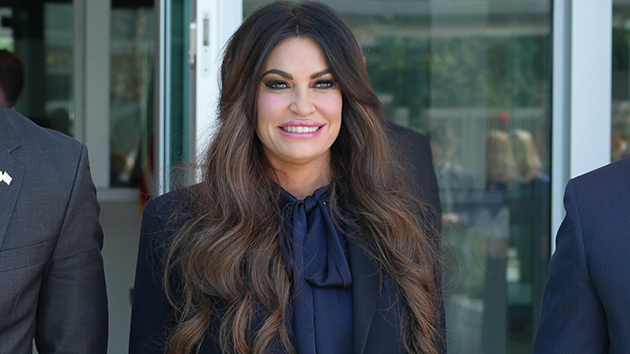
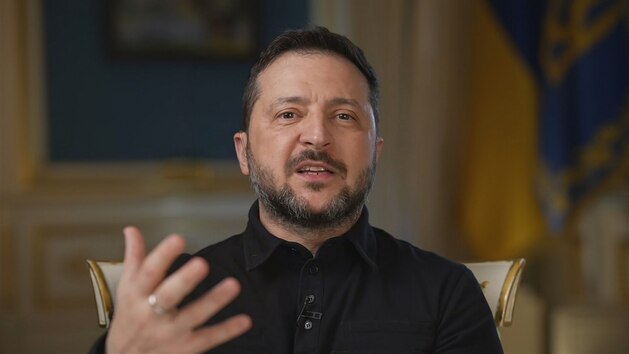
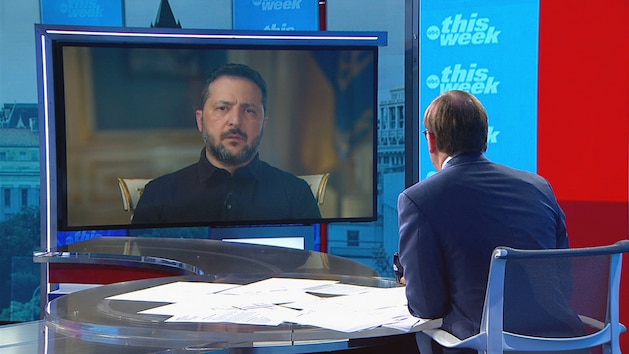
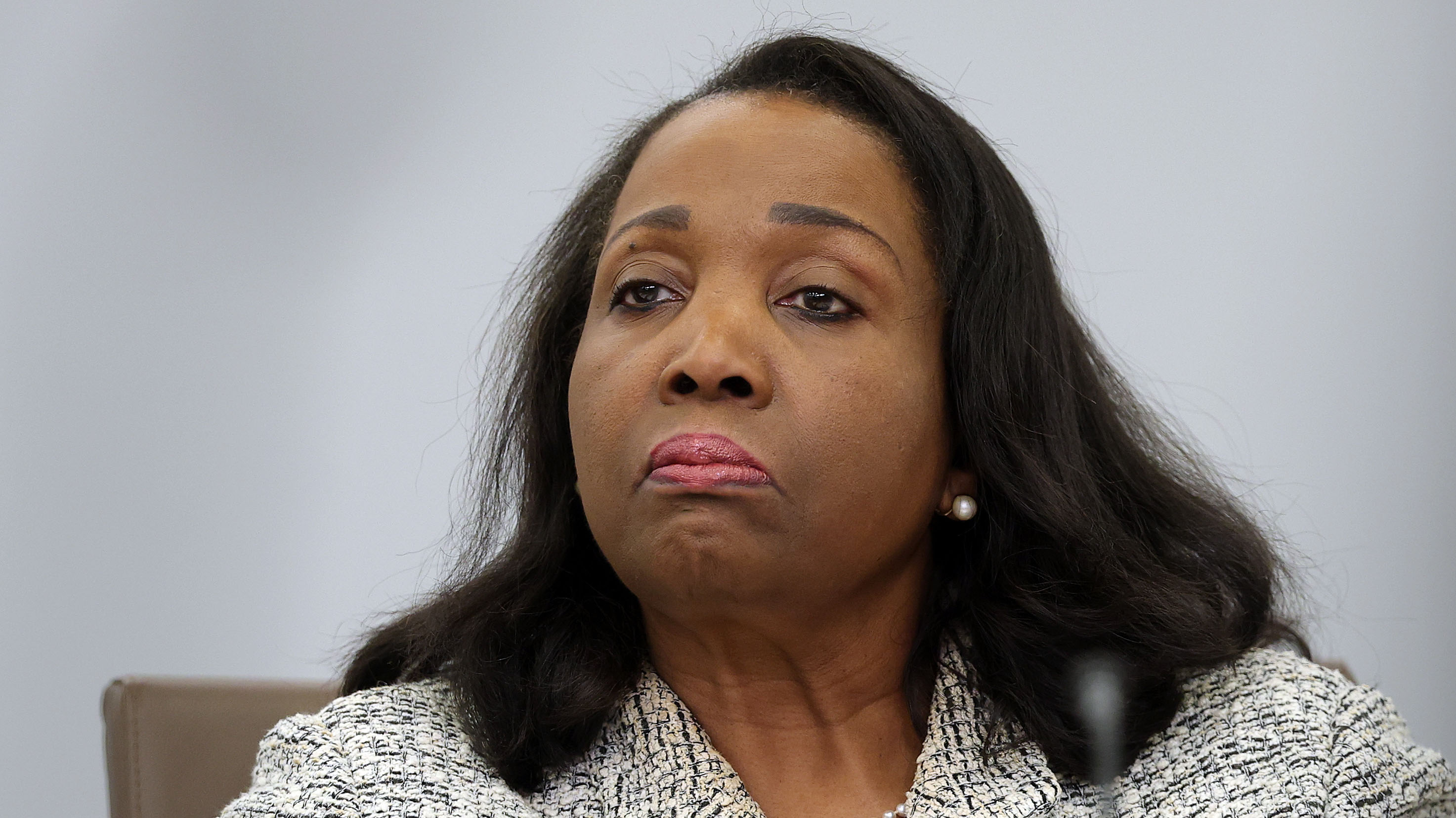
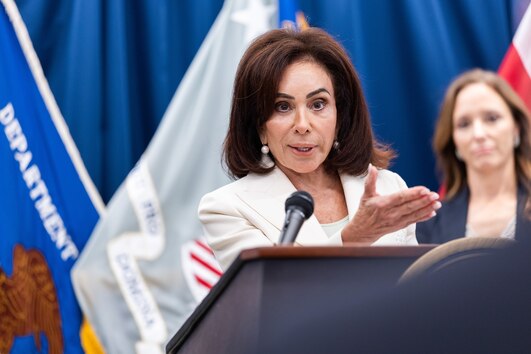
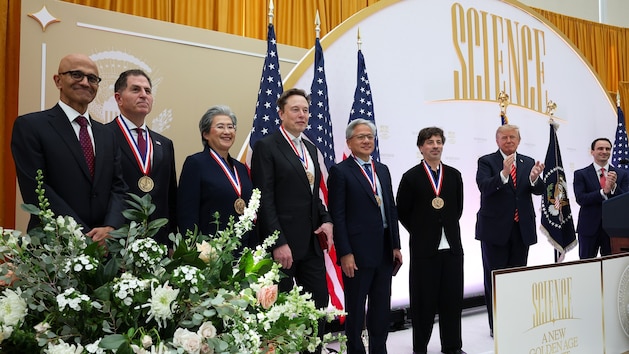
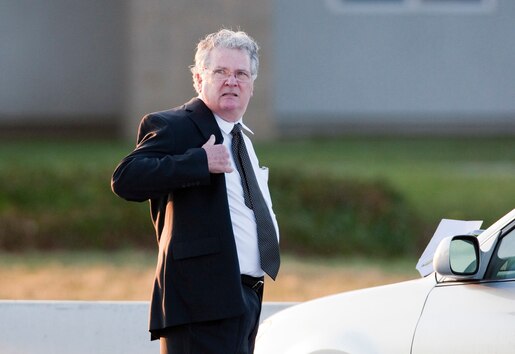
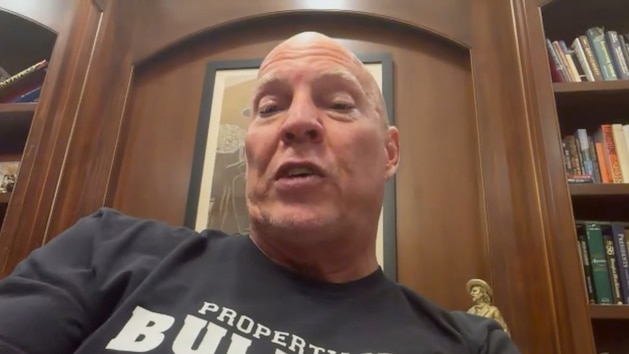
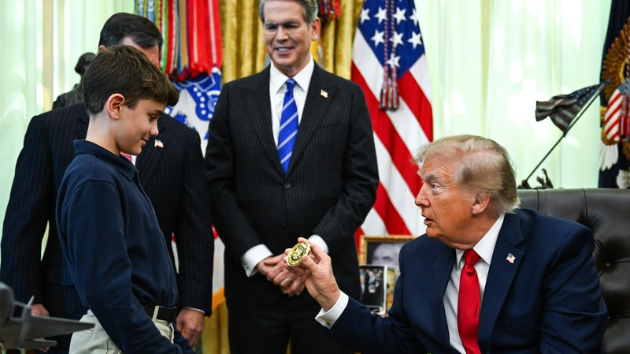

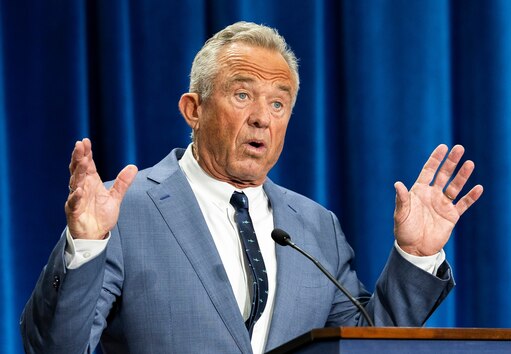
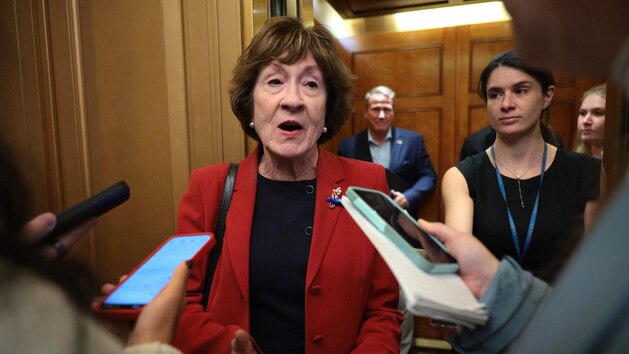
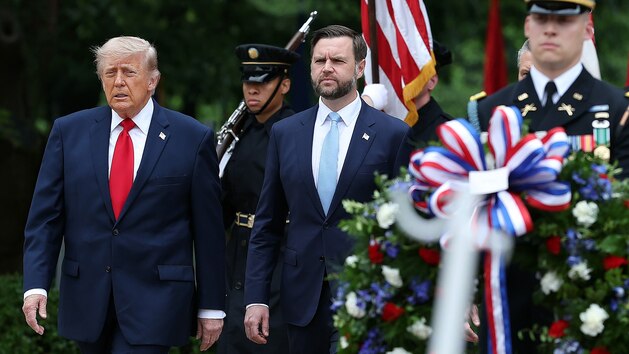
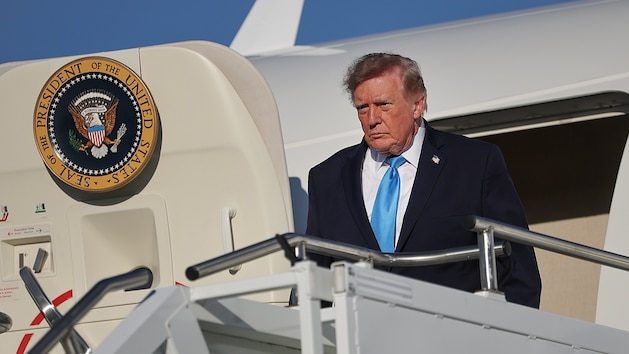


.jpg)